
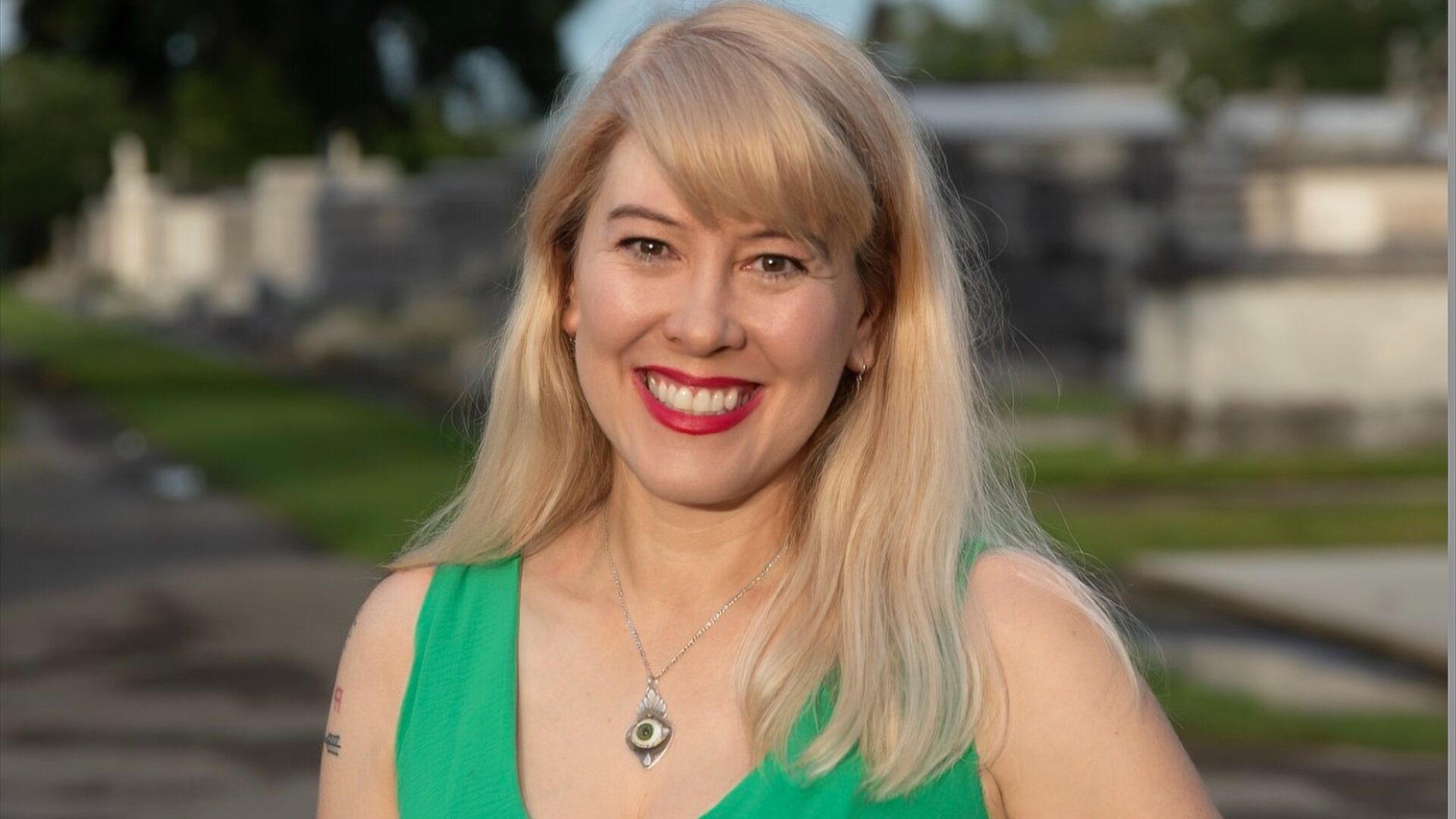
You have made a name for yourself as an author and historian who focuses on unique aspects of New Orleans. What piqued your interest in local history?
To be honest, when I was growing up in Washington state, I was never particularly interested in history. Literature has always been my first love.
But living in New Orleans, I found this strong pull to try and understand my surroundings. I moved here right after school, and I was coming in pretty green. I want to know what things mean, not just enjoy them, and in New Orleans, you can do both. Understanding the significance or intention of something always adds gravitas and makes you appreciate things even more or gives you a different perspective you didn’t consider and forces you to really think.
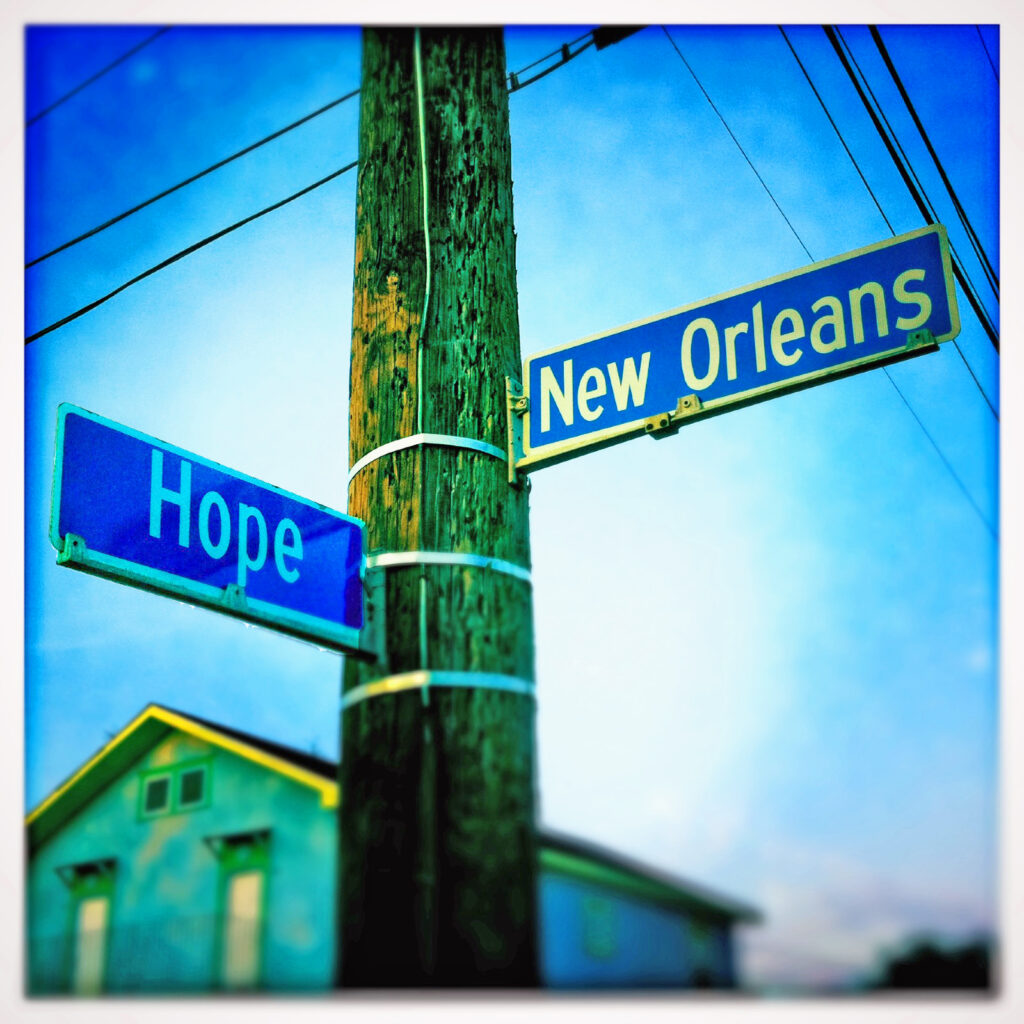
When I was selling my photographs at local art markets, one of my most popular ones was a photograph of two intersecting street signs: Hope and New Orleans. I can’t tell you how many locals — some multigenerational — asked me if those signs were real or if I just photoshopped them. I became curious where those street names and others came from and why. Who and how a city chooses to honor someone or something is very telling. In New Orleans, it is, of course, complicated, but it led me to write my first book “Hope & New Orleans: A History of Crescent City Street Names.” That photo changed everything.
Then, in graduate school I realized that while I loved to read, write, and discuss literature, I didn’t want to spend my time writing papers analyzing the allegories of the moors or the symbolism of fog from another writer’s perspective. I found myself drawn more to how literature impacted society than the actual literature itself.
Then I found The Mascot, a New Orleans weekly illustrated newspaper that ran in the late 19th century and was the source of multiple lawsuits, gun battles and court orders, and I had to face the reality that my passion for writing was shifting in a different direction.
Literature is private. There’s a deep personal beauty to that. What a poem, a story or a song means to one person can have a completely different meaning to someone else and there is never a wrong answer. I love that. It’s not to say that history is not the same, for there are also multiple interpretations to specific events, but to me, history is more public.
On Aug. 29, 2005, not everyone in New Orleans was reading the same book or watching the same film, but everyone was experiencing Hurricane Katrina. Literature tends to explore the human condition while history is a chronicle of the human condition. I try to infuse a little bit of literature and history in everything I do.
What is the one piece of New Orleans history you wish more people knew?
That’s a tough question. Untold stories always have the biggest appeal for me, and those stories tend to revolve around women and minorities, voices that aren’t always heard. But there are a lot of individuals and organizations who are actively telling many of these stories.
My wish would be for people to be more curious and take advantage of these opportunities. Get out in the city and learn and experience. Go to a lecture, listen to music, visit an exhibit, take a class, attend a conference. There is no greater city than New Orleans where you can hit that perfectly sweet balance between a priori and a posteriori.
Save Our Cemeteries has been a big part of your life for a long time now. How did you become involved with the organization?
When I was writing my second book, “Stories from the St. Louis Cemeteries of New Orleans,” I reached out to Save Our Cemeteries with questions and they were always very accommodating. They gave me a research award and then asked if I was interested in coming on the board. It was my first time being on a board, and I spent the first few months just watching and learning, eventually becoming more and more active.
When I rotated off the board, I continued volunteering by organizing lectures and photographing events. In 2022, they asked me to come back to the board in a leadership position and the rest is history.
What are the biggest issues facing New Orleans’ historic cemeteries today?
Funding and misinformation.
It’s heartbreaking to me that our cemeteries are such a source of fascination and interest to outsiders, but we don’t give them the reverence and protection they need and deserve. We need to find a balance between respecting the tomb owners and the tombs as well as appeasing the interest from visitors.
Obviously, tourism is a major driver of our local economy and is vital, but we as a city have a history of not respecting or caring for the very things that bring people here in the first place — like many of our cultural bearers.
Cemeteries are an extremely popular tourist attraction, yet we don’t make them a priority. I believe that if we can increase knowledge on a local level, it can only lead to a greater impact on a national and international level.
First, we need to properly care for our cemeteries, and sadly because of the lack of funding, many of the cemeteries have entered exclusive contracts with large tour companies to earn money for their upkeep. And a lot of the information these companies are sharing is incorrect. And while I sympathize with the cemeteries — because for many their hands are tied and everyone is making money off them except for the cemeteries themselves — it does sadden me that only one voice is being represented in a city as diverse and multifaceted as ours.
Cemeteries, as the saying famously goes, are for the living, but I fear in New Orleans, it is becoming that cemeteries are only for the living who can pay.
What do you hope Save Our Cemeteries can next accomplish now that it’s part of the Preservation Resource Center?
I would like Save Our Cemeteries to go back to its original mission of preservation, restoration and education.
I believe with the resources that the Preservation Resource Center has to offer that we can work with the community on educating people on how to do proper tomb restoration, apply for permits, reclaim family tombs, etc.
Before the merger, we were working on starting a scholarship program for middle-school-aged children that would involve giving them free tours of the cemeteries, which would hopefully spark a passion in them or at the very least an interest and respect in our cemeteries that they can carry with them throughout their lives.
Finally, what does historic preservation mean to you?
There is a beautiful Chinese proverb that I keep going back to: “One generation plants the tree, and another gets the shade.” Actions that we take today can have a positive impact on future generations. We need to start planting.