

The New Orleans Historic District Landmarks Commission asked the developers behind the contentious proposal to construct a new hotel in the 600 block of Elysian Fields Avenue in the Faubourg Marigny Historic District to try again to improve their design so that it fits in better with the neighborhood.
The project would consume a large portion of the block with facades visible on Royal and Chartres streets, in addition to the main entrance along Elysian Fields Avenue. In 2024, the developers unsuccessfully petitioned the City Planning Commission and the City Council to build 24 feet above the allowable height limit. As a compromise, the City Council allowed a floor area ratio waiver, which essentially allows the hotel to exceed the maximum size limit relative to the lot, while keeping within the area’s height restrictions.
Since the project is new construction, the designs must be approved by the HDLC’s Architectural Review Committee. The developers, Baton Rouge-based 621 Elysian Fields Group LLC, first met with the ARC in June 2023, when they were told that the hotel designs as proposed were not appropriate for the site and historic neighborhood.
After three additional meetings, the ARC denied the most recent plans in July 2025, noting that the developers were trying to include too much on the site, overwhelming the neighboring historic buildings.
The developers appealed the July 2025 ARC decision to the HDLC at its meeting on Dec. 3, where HDLC staff stated that the “proposal does not meet the HDLC Design Guidelines for new construction as it remains incompatible with the established scale, massing, rhythm, and site development of the surrounding historic context.”
Staff added that the “design has also undergone limited meaningful revision in response to consistent ARC recommendations” noting that while the height was reduced, the size, distribution, proportions, and overall look had remained largely unimproved, creating an “over-scaled and poorly articulated behemoth.”
Zach Smith of Zach Smith Consulting & Design represented the owner at the HDLC meeting and stated that “every round of feedback has been taken seriously and [they] have worked to respond in good faith.” His additional comments focused on the fact that the proposal is within the allowable height limits, but progress has been impeded by too many competing stakeholders, all with their own interests.
The property owner and the project architect were also present but did not make comments.
Fourteen people spoke in opposition to the project, including numerous neighbors and the PRC.
In response to the developer’s apparent lack of willingness to further cooperate with the regulatory process in historic districts, Commission Chair Jennie Cannon West lamented, “Truthfully [I] would hate to see this be a precedent … to approaching HDLC, in that the answer is just no, we won’t work with the guidelines. I really wish the developer would work with HDLC and with the ARC to amend the design to better fit with the fabric of New Orleans.” She added, “We have seen this application a number of times. I think everyone would like to see this project move forward.”
Commissioner Ross Karsen moved to defer the application and require that it go back to the ARC, concluding that he “would love to see ARC support a proposal of this scale on such a significant boulevard in town.” The motion was approved with a unanimous vote. The applicant can appeal the decision to the City Council within 10 calendar days.
Application for demolition of Storyville landmark is deferred
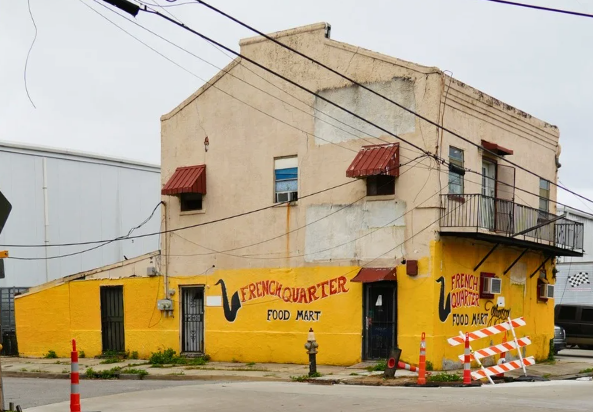
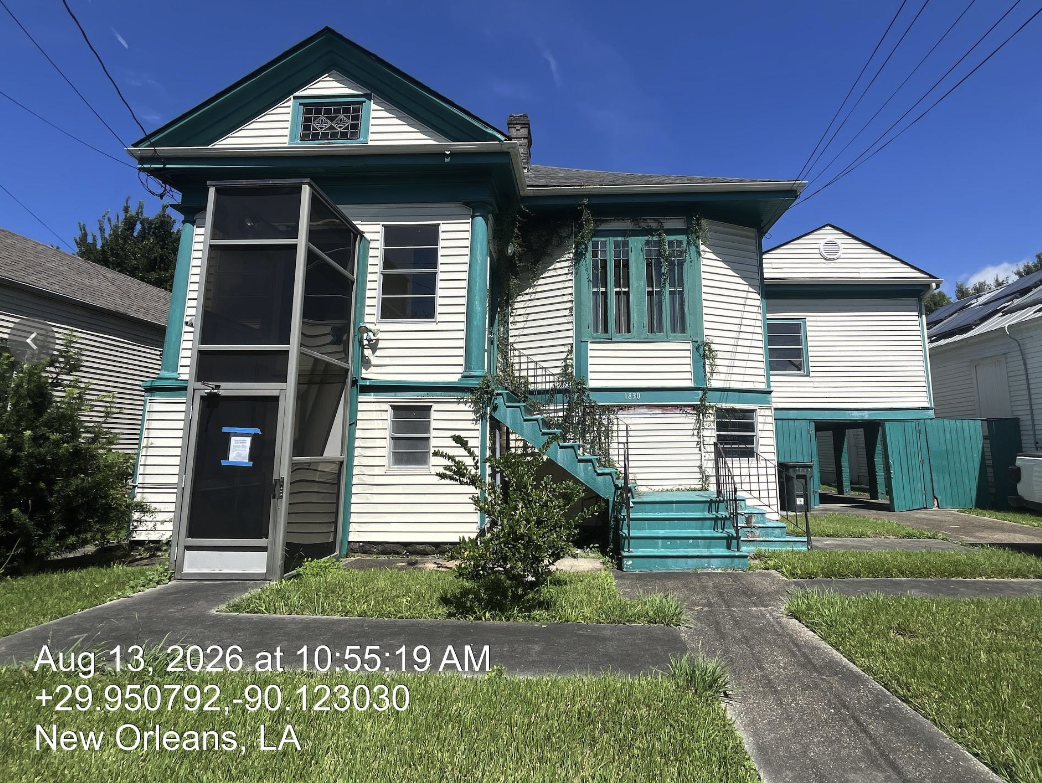
In other business, the applicant looking to demolish the former Joe Victor’s Saloon (1534 St. Louis St.), a local landmark and the oldest of only three remaining buildings from Storyville, did not show up to the HDLC meeting, so the commission deferred their application.
Although there was no discussion about the property, the HDLC staff report concluded that the “combined masonry failure, structural deterioration, reconstruction requirements, external industrial conditions, and life safety concerns place the building beyond feasible rehabilitation.”
Storyville, once the city’s red-light district, was as culturally significant as it was infamous, with saloons, dance halls, restaurants and cabarets, where the experimentation of Black and Creole musicians contributed to the birth of jazz.
Storyville was razed in the 1940s and it would be a terrible loss of cultural heritage for neglect to claim these last remnants.
Due to the cultural and historical significance of the building, the PRC plans to reach out to the owner to help find alternative solutions to demolition and identify partners to assist with analysis. In the meantime, we hope the owners immediately secure the property to prevent further deterioration, avoiding collapse and potential human harm.