
For half a century now, the towering tomb of Alexander Milne in St. Louis Cemetery No. 2 has received regular care, ensuring that the 187-year-old monument to the hardware dealer and brickmaker who left his fortune to open orphanages in New Orleans, does not fall victim to time or the elements.
Many other tombs in the 202-year-old cemetery have not been as fortunate. Their upkeep often declines with each passing generation, leaving some in various stages of disrepair.
That neglect reflects a broader challenge across New Orleans: a shortage of craftspeople who know how to care for historic masonry, ironwork and stone which make up countless buildings and homes in the city.
“There is definitely a growing need for more trained and skilled craftspeople,” said Sara Lowenburg, director of the Preservation Resource Center’s Save Our Cemeteries department.
A new program aims to help solve that problem.
HANDS-ON EXPERIENCE
Bridge to Crafts Careers launched in New Orleans on Dec. 8 with the dual goals of training people interested in historic preservation trades and providing much-needed repairs to tombs throughout St. Louis No. 2.
The initiative is a partnership among the PRC, the World Monuments Fund — an international nonprofit dedicated to safeguarding cultural heritage — and Heather Veneziano, director of the Historic Preservation program at the Tulane University School of Architecture and Built Environment.
Originally created by the World Monuments Fund in 2015 to train young adults in the New York City area, the program, known as B2CC, offers people hands-on technical instruction and a pathway to long-term employment in preservation trades.
“There is no downside to this program, and it aligns perfectly with the PRC’s mission of protecting the places, culture and people that are so important to this city,” said Kristin Gisleson Palmer, the PRC’s executive director.
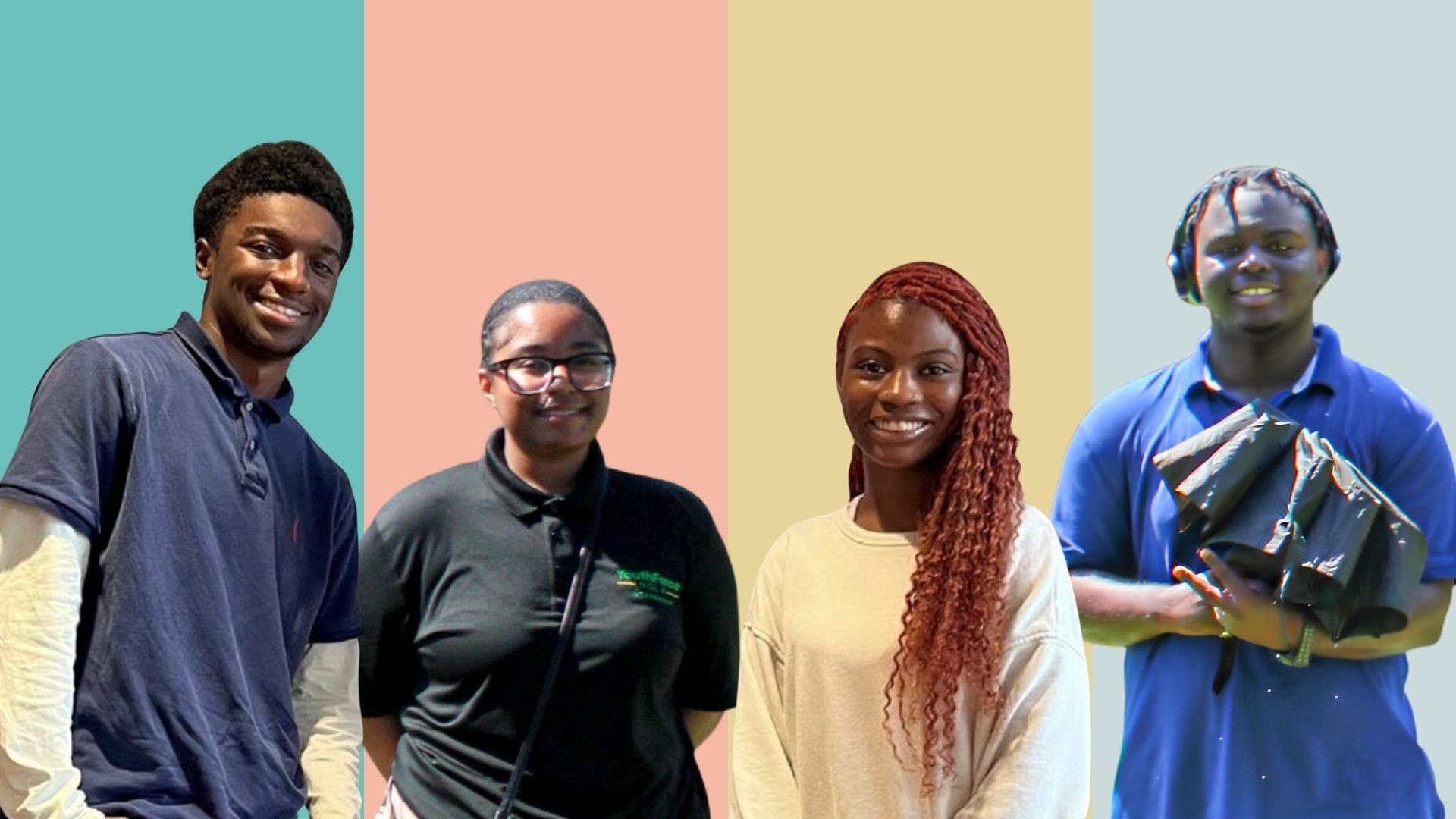
A dozen paid participants interested in craft careers and historic trades enrolled in the inaugural two-week session in New Orleans. Some were in their teens; others were in their 50s. A few had some construction experience; others had none.
All shared a desire to at least learn a new skill.
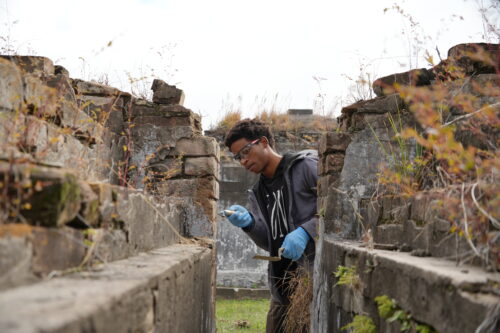
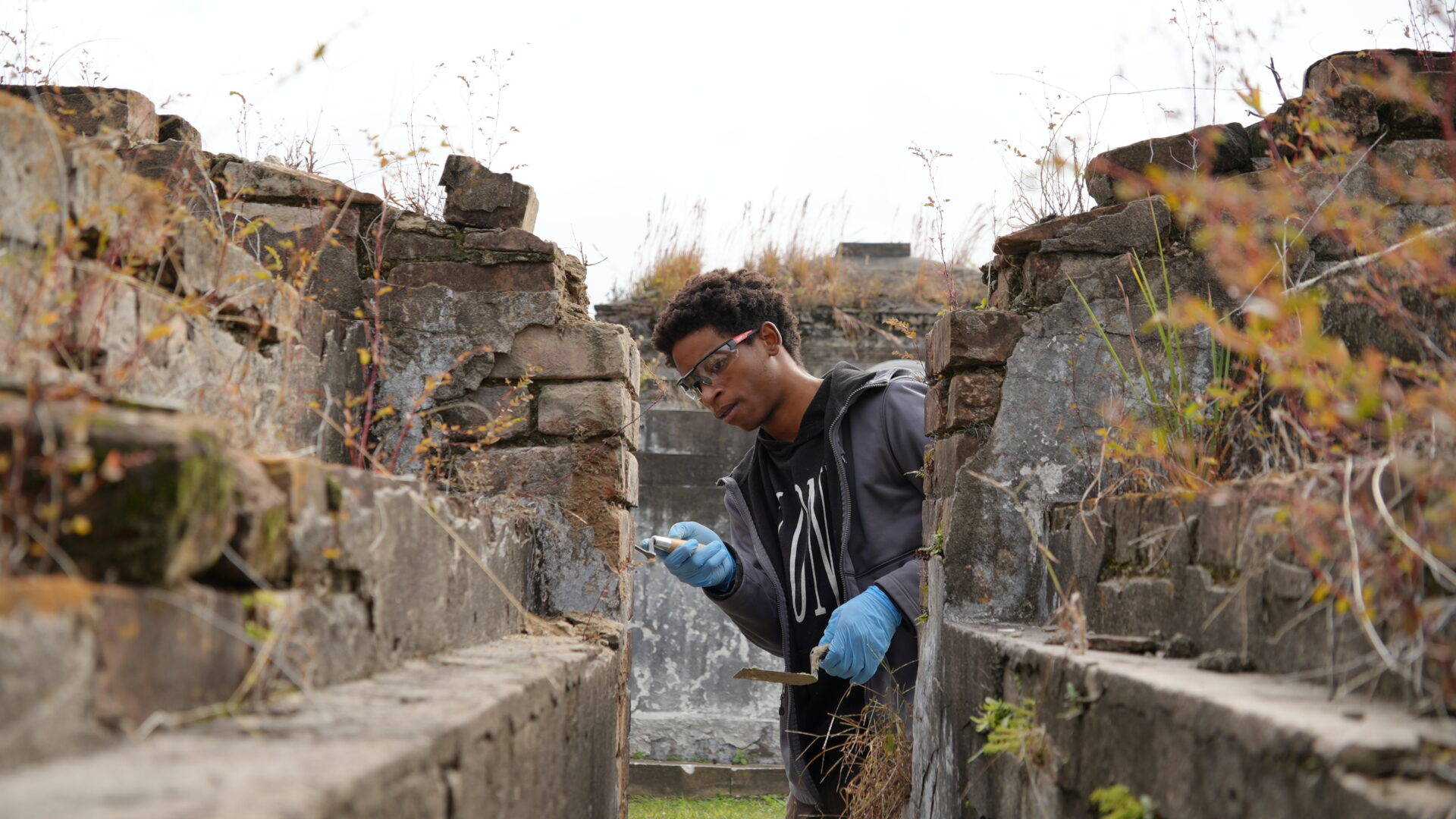
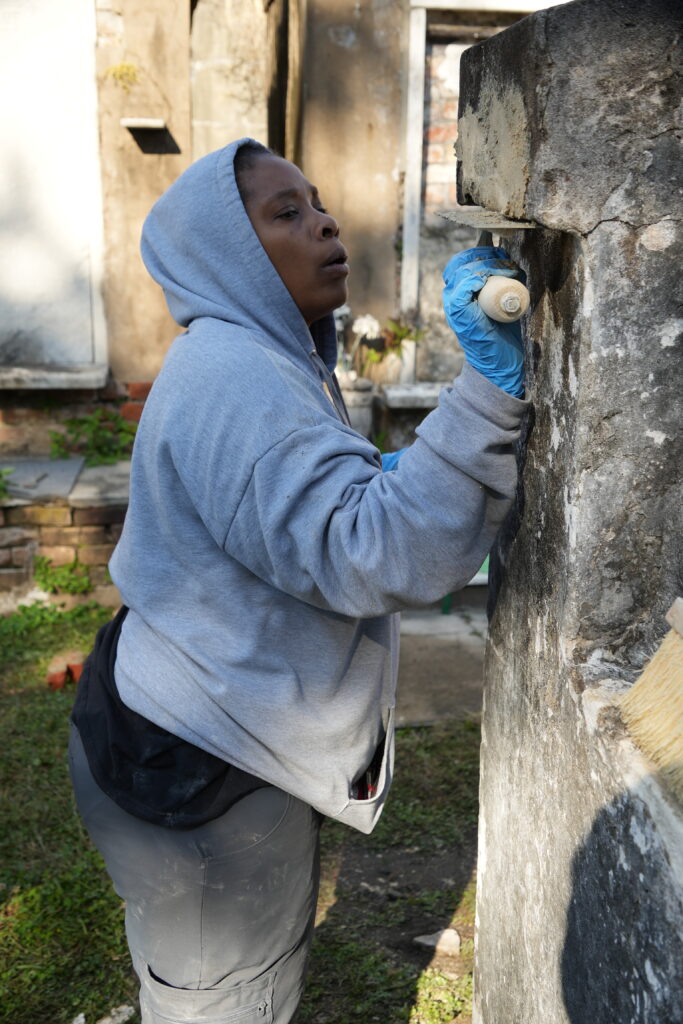
Over the course of the two-week program, participants learned proper methods of cleaning and repairing stone tablets and ironwork, made repairs to some tombs and removed invasive vegetation from others.
As participants in B2CC, “(They) learn these transferrable skills that they can then build into careers,” said Elimarie Garcia-Cosme, global heritage training manager for the World Monuments Fund. “In the end, there is a pathway to employment.”
The goal is for the PRC to grow the program to 10 weeks with additional training and certifications for participants.
Shantel Jenkins — a grandmother of eight — said she signed up for the program since she has interest in preservation and renovation. But she never had the opportunity to learn the skills necessary for that type of work.
“There’s no training for this,” she said. “I’ve never seen this come about until now. This is a good opportunity, especially for our young kids … to get this program under their belt. It’s a good trade.”
‘IT MAKES YOU THINK’
While the Archdiocese of New Orleans owns the cemetery, which opened in 1823, each tomb is privately owned.
The archdiocese provides upkeep, known as perpetual care, for those who pay a one-time fee. But many tombs rely on the families that own them to maintain them. That arrangement often results in a lack of upkeep after families die out or descendants move away or lose interest.
The lack of care is visible throughout St. Louis No. 2, where tablets have fallen off, iron fences rust and brickwork crumbles.
The tombs repaired during the B2CC program are part of the archdiocese’s Abandoned Tomb Initiative, which aims to repair tombs that have had no burials in 40 to 50 years, have no family contact on file and are in poor condition.
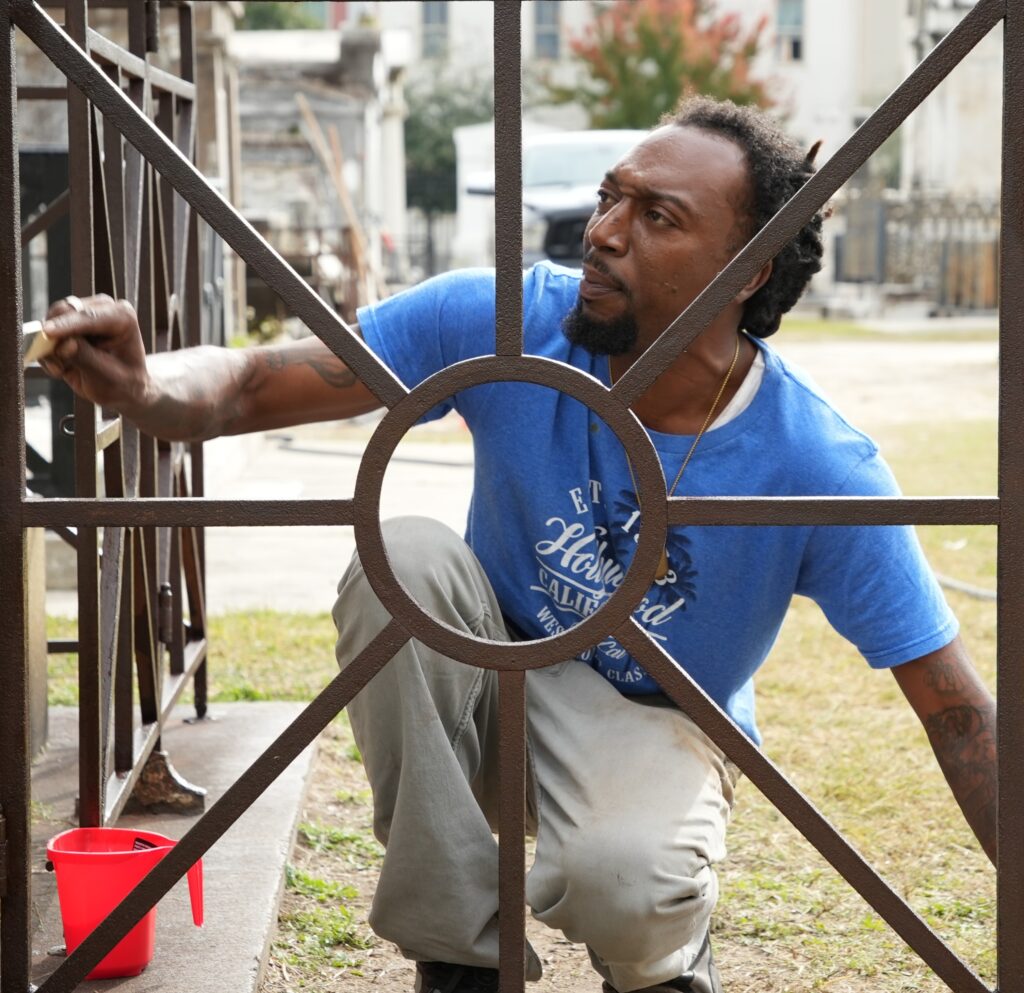
“You’ll spend more time at rest than you will living,” said Kendrick Wilkerson, who signed up for B2CC to learn a new skill after years selling cars. “It’s a way to give back. I’m helping people.”
Leif-Samuel Dawson, an 18-year-old senior at New Orleans Charter Science & Math High School, signed up for B2CC after completing an internship at Uncommon Construction.
He said the lessons he learned during the program were valuable — and the work made him think.
“It’s a really complex feeling,” he said after the first few days of making sure that the resting places of people who in some cases were born in the 1700s were cared for. “It makes you think of how short life is.”
In early October, a group of half-a-dozen students from Veneziano’s program at Tulane participated in a trial run at the cemetery to prepare for the launch. She described B2CC as a “two-for-one deal,” offering critical maintenance to historic cemeteries while building a workforce with skills urgently needed across the region.
“If you learn masonry skills on a tomb, it’s extremely transferable to historic buildings, especially in the French Quarter and other places that have old, historic brick,” Veneziano said. “It’s really a specialized craft, and not that many people know how to do it.”
Chloe LeFrere, one of the participants in the first formal program in December, described her time with it as valuable. She said she hoped to take part in the longer 10-week B2CC program the PRC aims to launch.
“New Orleans is the market for that,” she said. “Out here, (there is) plenty of iron work, brick work to be done.”
Danny Monteverde is editor of Preservation in Print.