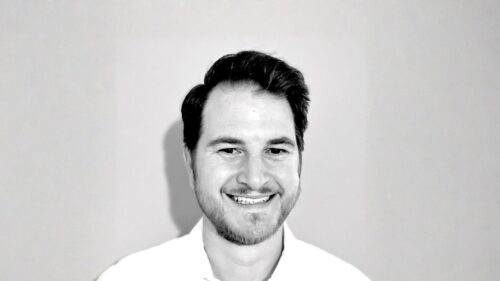

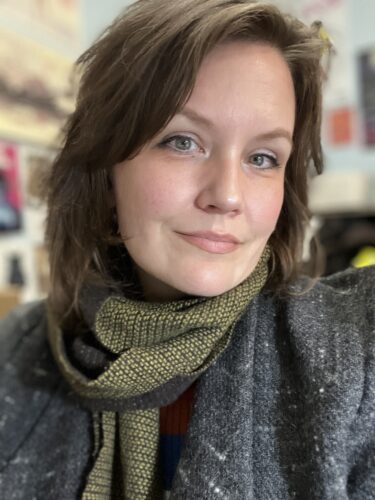

Carol Quillen is the President & Chief Executive Officer of the National Trust for Historic Preservation. The National Trust is hosting the 2024 PastForward Conference in New Orleans Oct. 28-30, 2024.
Where are you from, and why is historic preservation important to you?
I grew up in New Castle, Del., which describes itself as “the oldest continuously occupied town in the Delaware Valley.” My grandfather and his brother had started a car business there in the 1920s, and after my father’s service in the Air Force, my parents moved back there with my sister and me. As a kid, I loved New Castle’s open spaces, huge park, and its compact walkability; within blocks of our house there was a library, grocery store, two drug stores (one with a lunch counter), a movie theatre, and a penny candy store. Each of these places had a history tied to that of the town and the generations of people who had helped to build it. I heard their stories, and I lived in the midst of their work.
Even as a kid, I think I recognized the distinctive character of New Castle’s layered architectural history, evident in buildings I walked by every day. The church we attended is over 300 years old. The Dutch House, a few blocks away, is a late 17th-century building that was remodeled twice during the 18th century and once in the 19th century before being restored in the 20th century with the leadership of Louise du Pont Crowninshield, who helped found the National Trust. I lived on the same street as the Read House, built for the son of a signer of the Declaration of Independence, which was a private home when I was very young and is now a house museum, whose curators are asking great questions about the stories that distinctive property holds and how it can best serve the public now.
Growing up in a colonial town didn’t make me care about preservation per se, but it did spark a deep interest in how human beings understand, connect with and make use of the past in the present, and it gave me a real appreciation for particularity. New Castle had a distinctive history, and I valued how that was reflected in the way it looked. As I grew up, I also saw the challenges of sustaining a livable tourist attraction. Many of the small businesses I remember as a kid are now gone, often replaced by stores more attuned to visitors. I’d like to understand this dynamic more fully.
What attracted you to the National Trust from a career of leadership in academia?
Growing up I thought I’d go to law school, but in college, history courses opened me to whole new worlds, both intellectual and ethical. When I had the opportunity to attend graduate school, I gratefully jumped at it, even though it was not in the plan. That experience really helped me to be attentive to the unexpected opportunities in front of me, big and small, and to see these as precious and certainly unearned gifts. So when I had the chance to do some interesting things at Rice University, I did that, and these experiences helped make me a viable candidate for the presidency of Davidson College.
I loved my time as a professor and college president, and I’m grateful beyond measure for all that Davidson gave to me. But institutions benefit from regular new leadership, and after 11 years, it was time to step down.
I thought I would return to teaching (which I loved), and at the same time I tried to be attentive to opportunities in front of me, asking myself what, in this moment, I’m called to do. As I learned more about the position at the National Trust and all it had accomplished, I came to believe that perhaps I might be able to contribute to this venerable organization now, at a time when the country is fractured, partly over questions related to history and how we in the present understand our relationship to our immediate and distant past.
I also find the concept of preservation fascinating because, as preservationists know, it can’t be achieved by keeping things the same or freezing them in time. The scholars who most loved Latin arguably killed it as a living language by refusing to let it adapt. And for an organization or institution to preserve and uphold its founding values, its practices will need to change. So, if preservation can’t mean that everything stays as it always was, what does it mean? And how have we and do we practice it? The National Trust’s approach to these questions inspired me to learn more. I realized how powerful preservation tools and approaches are, and I saw how these significantly contribute to the challenges that we face as a country and a people. Building on its venerable legacy, the National Trust can help lead these efforts. I’m grateful I get to be a part of that.
What challenges in the field do you hope to address during your tenure as CEO?
I have so much to learn about preservation. I think my usefulness to the Trust and to the field comes in part from my outsider perspective. Experts are rightly focused on addressing challenges within their fields. I think I can highlight how the work of preservationists is addressing many other urgent issues, from sustainability to economic revitalization to affordable housing to telling the full American story to honoring the particularity of cities, towns and neighborhoods, a particularity that speaks to this nation’s global roots.
I think about Main Street America, which uses preservation approaches to re-energize commercial districts and small downtowns. I think about the National Trust Community Investment Corporation and how it helps to repurpose older buildings so that they serve communities now. I think about the African American Cultural Heritage Action Fund, which is remaking the commemorative landscape of this country to honor the achievements and contributions of Black Americans. Each year, the 11 Most Endangered Places list helps to mobilize the public to activate places that matter to their communities. We have a new loan fund at the Trust that can help ensure access to capital in rural and disinvested communities. And educators at historic sites across the country help millions of visitors connect to the past and the experiences of those who lived before us who shaped our world. Preservationists know that places hold power. We activate that power to serve the public and improve people’s lives in all kinds of ways. I want more people to recognize that.
What are some of the most fun or inspiring moments you’ve had so far since being named the new CEO?
I love visiting and learning about historic sites and hearing from the incredibly talented people who serve as guides and interpreters. This is challenging work. You must meet people where they are, and in any given group, you will have individuals from different backgrounds with divergent views and convictions. At the same time, the broad diversity of visitors to historic sites gives those of us connected to them a distinctive opportunity to foster conversation that is grounded in a shared experience of a meaningful place. That possibility is inspiring, especially at a time when we as a people are so polarized.
I’ve also gotten to see preservation in action in a range of places — Franklin, Tenn., Los Angeles, Indianapolis, San Francisco, Asheville, N.C., Washington, D.C., Selma, Ala., and others. National Trust colleagues have generously introduced me to our sites (I’ve seen about half of them thus far), and I’m excited to see all of these in the coming months. I couldn’t be more excited about New Orleans, whose extraordinary history and architectural particularity make it unique. I can’t wait to meet the preservation community there and celebrate your work.