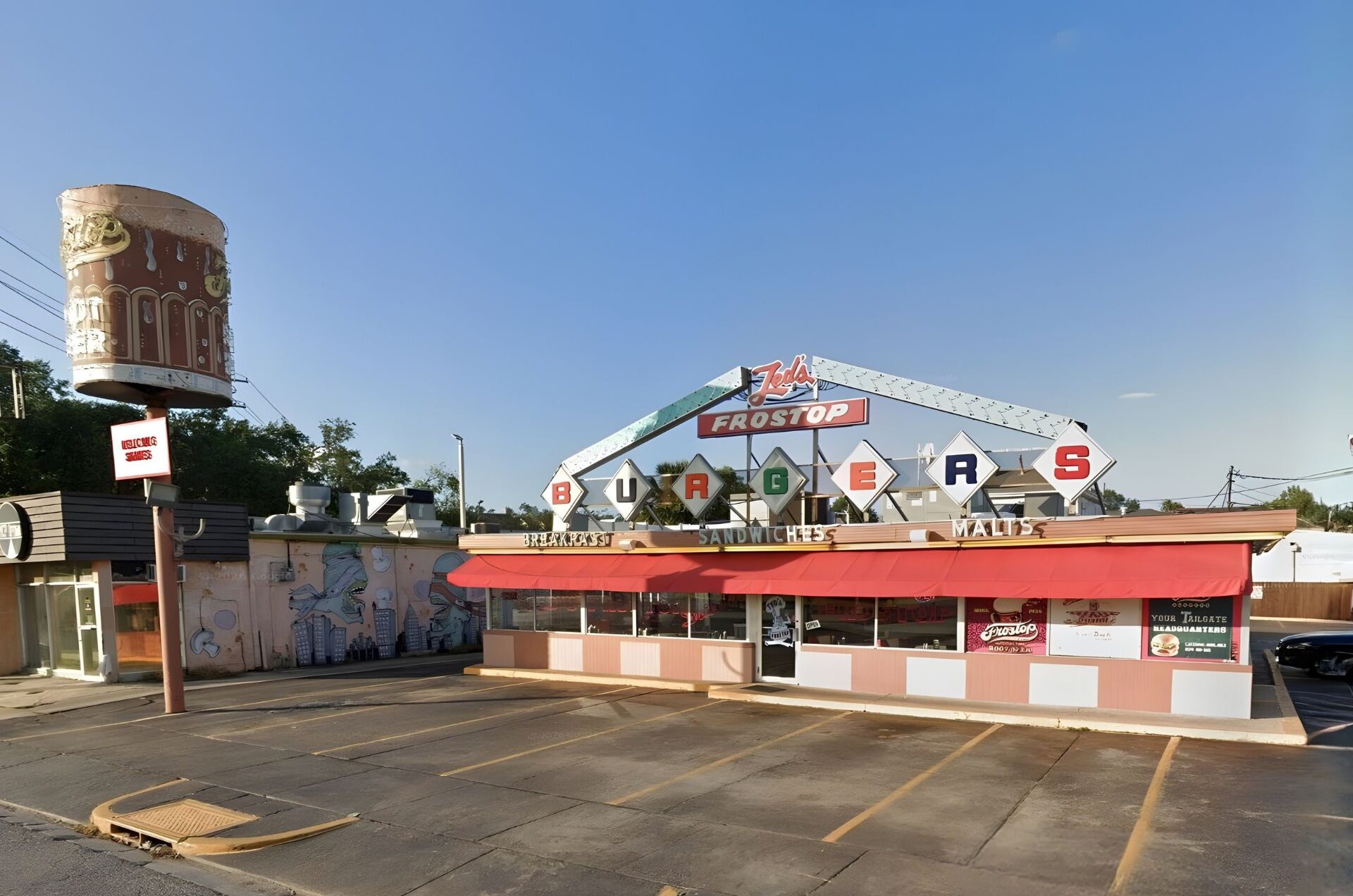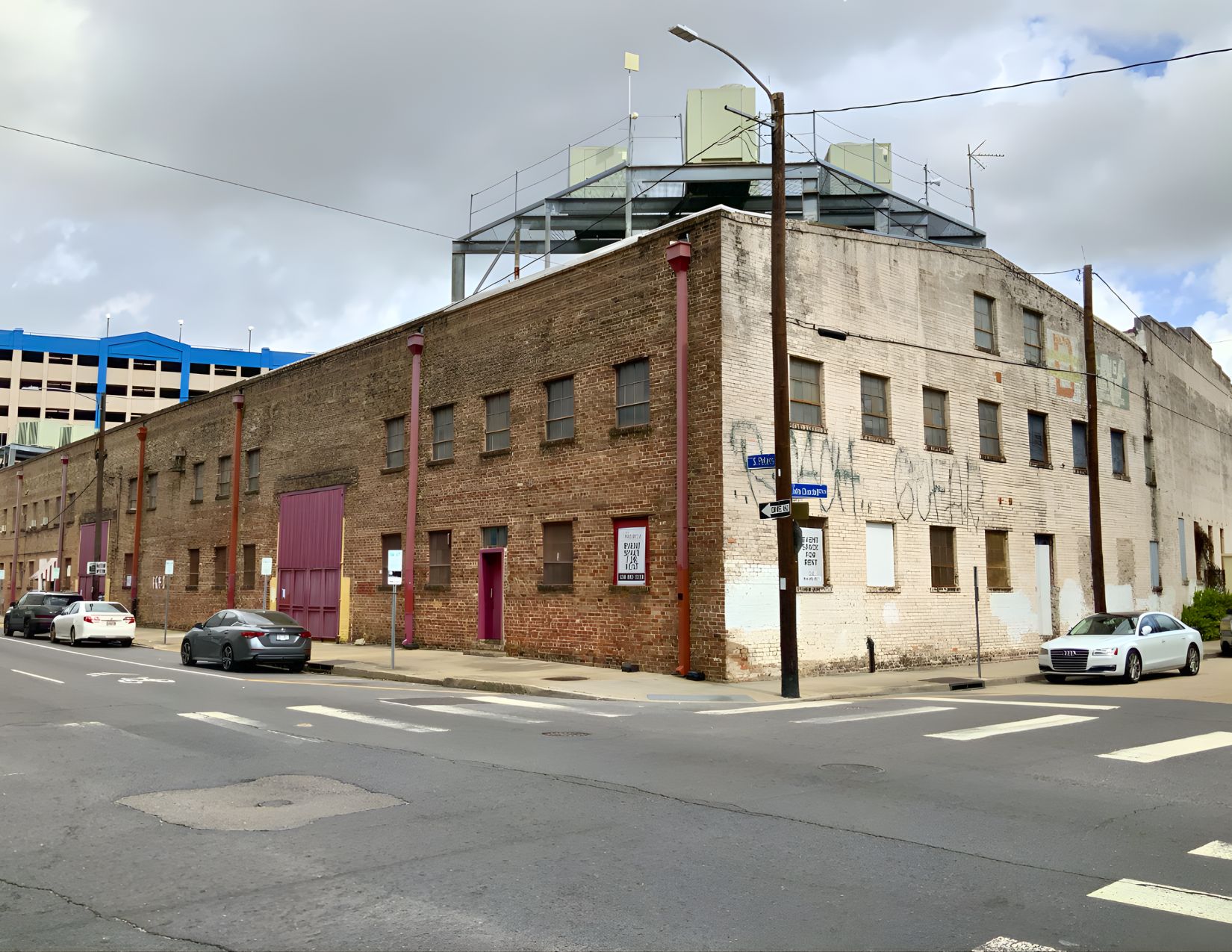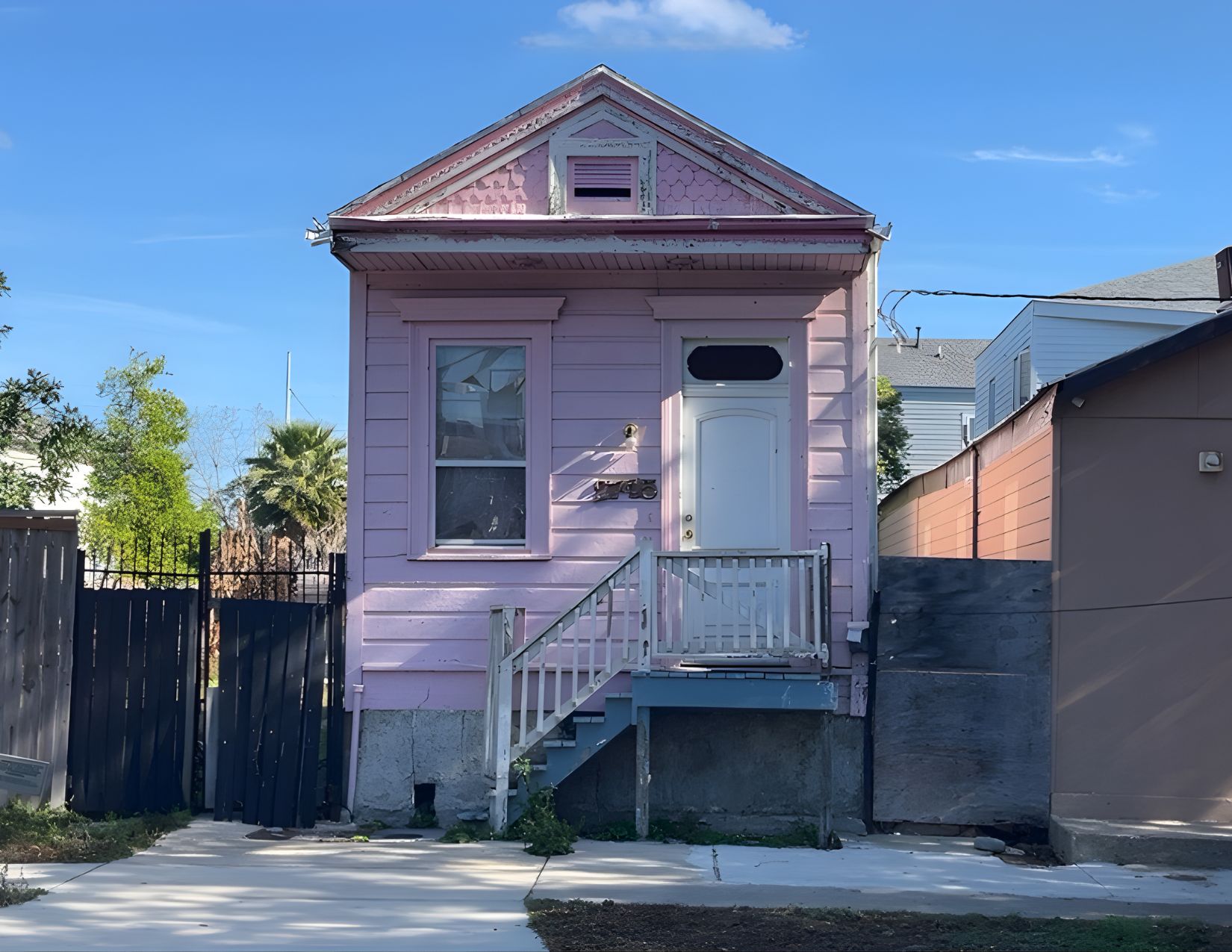




The Vieux Carre, Marigny, Treme and Bywater are categorized in New Orleans’ Comprehensive Zoning Ordinance as the city’s historic core neighborhoods, which are areas that developed during the city’s colonial period or continued those development patterns in adjacent areas.
The New Marigny Historic District, more commonly known as St. Roch, was listed in the National Register of Historic Places in 1994. While it shares much of its history with these contiguous neighborhoods, it stands out as the only one the New Orleans Historic District Landmarks Commission does not regulate. The New Marigny-South 7th Ward Neighborhood Association is looking to change that to help protect a corner of the historic area that residents say is facing an increasing number of demolitions.
In 1810, the lakeside extension of Bernard de Marigny’s eponymous plantation was plotted as Faubourg Nouvelle Marigny. The neighborhood developed largely between the 1830s and 1880s and early residents included French Creoles, German immigrants and free people of color. In the 20th century, significant jazz musicians, including Sidney Bechet, called the neighborhood home.
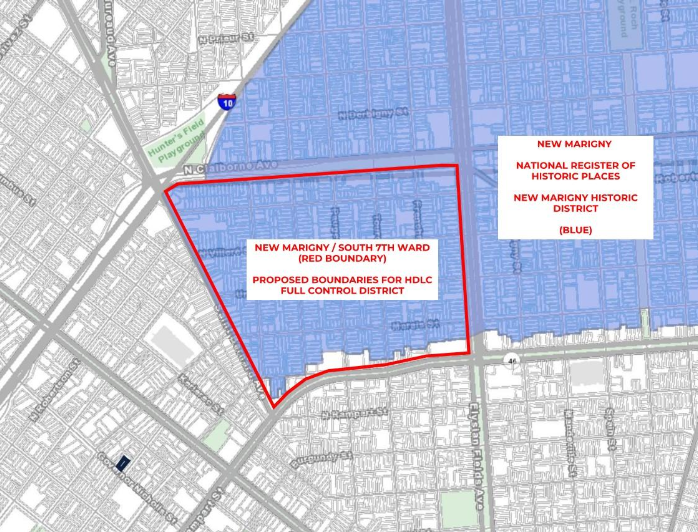
The NRHP designation, however, offers minimal protection for historic buildings and is only triggered when properties are threatened by federal projects. In New Orleans, demolitions in NRHP districts that are not protected by the HDLC do require approval from the City Council, but members of the New Marigny-South 7th Ward Neighborhood Association have noticed an increase in demolition requests and approvals, along with some troubling illegal demolitions.
With an aim to protect the neighborhood’s historic character, the organization is looking to carve out a local historic district within the larger NRHP district. The smaller local district would be bounded by St. Claude, St. Bernard, North Claiborne and Elysian Fields avenues.
After a meeting with HDLC staff in late 2024, members of the neighborhood association expressed tremendous interest in pursuing a designation as a local historic district, a result that was mirrored during a randomized survey the association conducted of approximately 200 homes: 90.4% of surveyed residents expressed support.
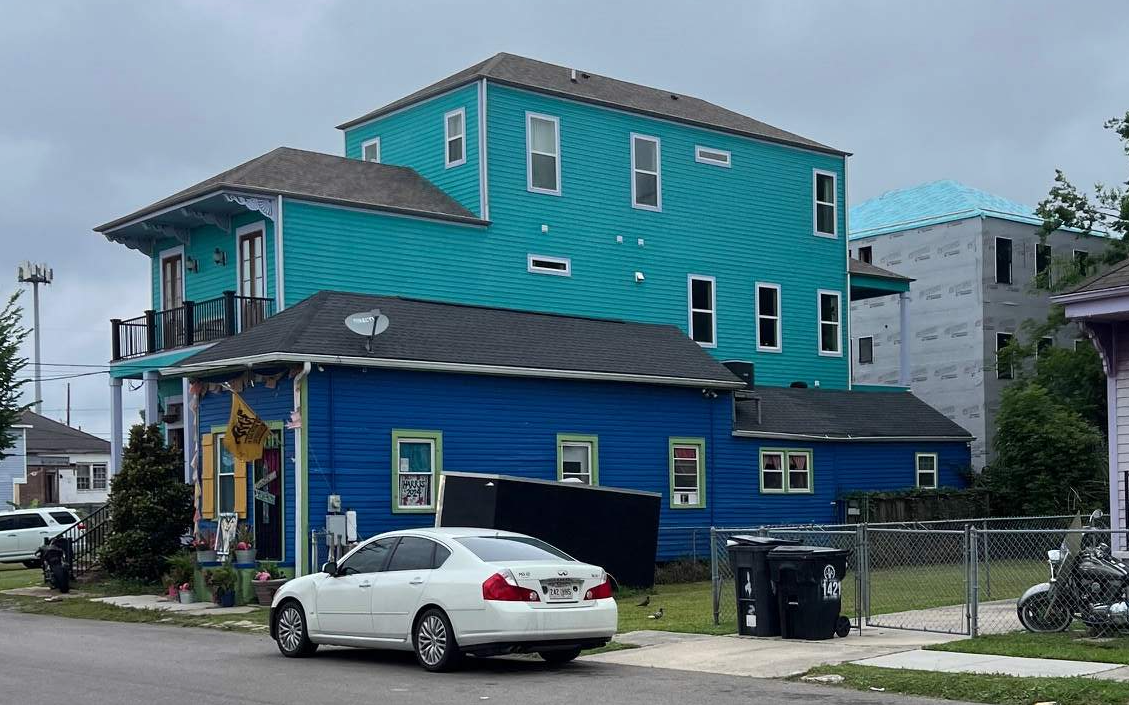
If designation as a full-control historic district is granted, any new construction and exterior building work visible from the public right of way would require approval from the HDLC. In addition, the HDLC could cite and fine building owners when buildings are not maintained, known as demolition by neglect. This would add a critical level of protection for the neighborhood, which residents feel is suffering from unmitigated and out-of-scale development.
Designation as an HDLC district requires the support of multiple city officials and agencies, as well as opportunities for public comment.
First, the mayor must select a City Council-approved study committee to work with HDLC staff and make a recommendation to the City Planning Commission. The CPC in turn will make a recommendation to the City Council, which will hold a vote. The neighborhood group has compiled a report outlining its request and is awaiting a response from the mayor’s office. Regulation of another historic district could also require additional staff and support for HDLC to handle the increased workload.
Meanwhile, the neighborhood association has also engaged with City Planning Commission staff about rezoning the neighborhood from HMR-2 to HMR-1 to better preserve the architectural scale of the neighborhood, which mostly consists of one- or two-story residential buildings.
In addition to the lack of HDLC oversight, the neighborhood association points to the HMR-2 zoning, which allows larger buildings and increased density, as a major contributor to the erosion of the neighborhood’s historic scale and charm. HMR-1 zoning is meant to keep a historic neighborhood more intact.
Since a change to the city’s Comprehensive Zoning Ordinance could be a lengthy endeavor, the neighborhood association is pursuing an Interim Zoning District, which would need to be approved by District C Councilman Freddie King.
MaryNell Nolan-Wheatley is the PRC’s Advocacy Coordinator & Public Policy Research Director.