




Richard Moe, who marshaled the resources of the National Trust for Historic Preservation to help rebuild New Orleans after Hurricane Katrina, died Sept. 15 in Washington, D.C. He was 88.
Moe, who led the National Trust for 17 years, said after the August 2005 storm and subsequent flooding that it would be in the city “as long as it takes.”
He saw the National Trust open an office in the Preservation Resource Center’s Warehouse District headquarters in January 2006. It remained open until September 2009, when a recession forced its closure.
“We knew that it was extremely important for us to be physically in New Orleans, which is why we immediately established a field presence (in the city),” he wrote in the October 2009 edition of Preservation in Print.
During its time in operation, the New Orleans field office and the PRC helped nearly 1,000 homeowners rebuild, obtained nearly $18 million in federal preservation grants for historic New Orleans homes and conducted second assessments of historic homes the city flagged for demolition among other accomplishments.
The National Trust and the PRC also created HOME AGAIN!, a program that provided $1 million in grants and gap funding to help residents return to rehabilitated homes, especially in the Holy Cross neighborhood and Lower 9th Ward.
“The older buildings in New Orleans have withstood decades — even centuries — of storms,” he wrote in the February 2006 issue of Preservation in Print. “We shouldn’t call in the bulldozers until we’re absolutely sure there’s no alternative.”
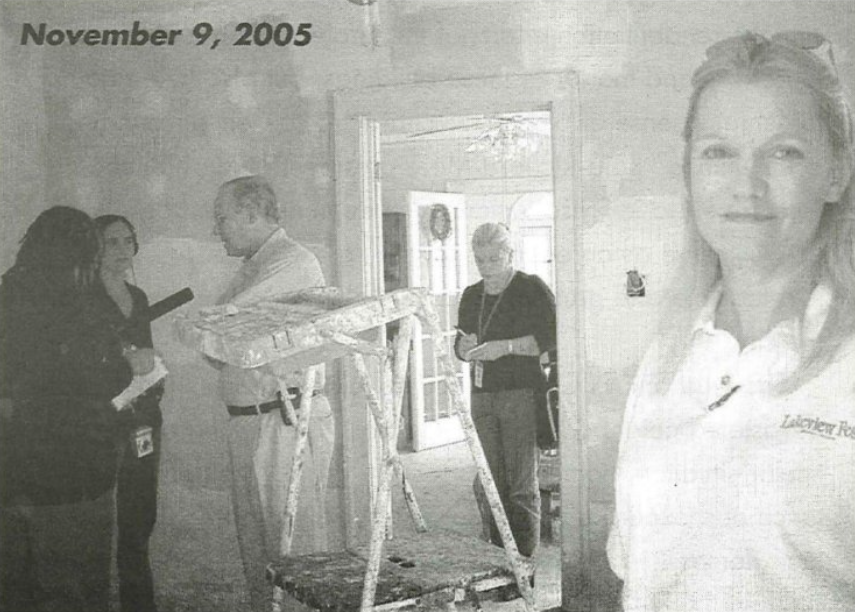
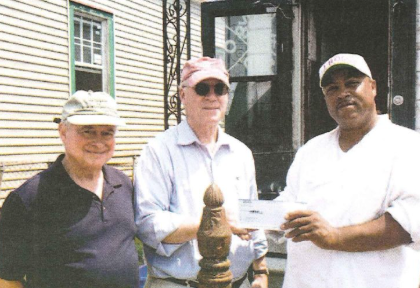
Moe was a regular presence in New Orleans after Katrina, advocating on the city’s behalf, visiting home renovations that were underway and presenting checks to homeowners in need.
In 2006, the National Trust named all of New Orleans’ historic districts to its list of America’s 11 Most Endangered Historic Places.
Moe was the keynote speaker during several of the PRC’s annual meetings throughout the years.
During a separate speech he gave in the city in 2007, he spoke about the importance of historic preservation as a way to preserve local culture, grow local economies and improve quality of life, especially after Katrina.
He described preservation as a “people issue from start to finish. We have a chance not just to repair damaged buildings, but to improve the quality of life for current and future residents of Louisiana.
“The ultimate goal of our recovery should be to allow displaced people to return to communities that are healthy, vibrant, familiar places to live and work.”
Moe and the National Trust also offered assistance to the PRC in the years before Katrina as it advocated for responsible development and historic preservation.

In 1996, developers planned to tear down the 1840s Sanlin and Friedburg buildings in the 400 block of Canal Street to make way for a 28-story hotel. Moe wrote a letter to then-Mayor Marc Morial urging him and local lawmakers to take action before it was too late. A copy was published in the May 1996 issue of Preservation in Print.
“This is a case where preservation and development are not incompatible,” the letter read in part, noting that structures such as the former BellSouth building on Poydras Street and the one-time home of D.H. Holmes Department Store on Canal Street had both been renovated for use as hotels.
“The special character of the Central Business District and Vieux Carre are at risk when faced with out-of-scale and insensitively designed projects such as this Marriott Hotel proposal,” Moe continued.
Those plans were ultimately withdrawn and the buildings remain standing.
Moe, an attorney and adviser to Vice President Walter Mondale, led the National Trust from 1993 to 2010 as its seventh president. During his tenure he delivered the keynote address during the PRC’s annual meeting on several occasions.
Speaking during the PRC’s 25th anniversary celebration on May 13, 1999, he said the organization was a model for similar groups around the country and was responsible for making the city a better place.
“Over the past quarter-century, you’ve made this city a laboratory for a wide and innovative range of programs that have saved countless individual landmarks, revitalized entire neighborhoods, utilized preservation as an engine for bolstering the local economy and found ways to encourage and manage tourism without sacrificing the quality of life for residents,” Moe said. “You’ve made the Preservation Resource Center one of the most effective local organizations in the country.”
Speaking more generally about preservation during that address, he summed up its importance: “All of us, whether we realize it or not, whether we call ourselves preservationists or not … need a place where we can have our history close at hand, where we can see it, where we can touch it, learn from it, be shaped by it.”
Danny Monteverde is editor of Preservation in Print.