In the 20 years since Hurricane Katrina, New Orleans and the people who live here have been described as resilient so often that some now cringe at the term. Extreme weather has become ordinary, and the expectation that people should repeatedly bounce back from disasters has become exhausting.
At the Preservation Resource Center of New Orleans, we expect that buildings, unlike people, can and should remain resilient. The chief purpose of buildings is to protect people, and they are a primary line of defense in keeping New Orleans a resilient city.
The devastation from Hurricane Katrina was unprecedented, creating layers of loss that have continued to manifest over two decades. The impact on neighborhoods, from Katrina and subsequent storms, remains visible in vacant lots where houses collapsed or were demolished, or in blighted properties that were abandoned when families were unable or unwilling to return.
Even in mild weather, water remains the biggest adversary to historic structures here. Moisture and other aspects of New Orleans’ harsh climate take a toll on the buildings we rely on, with near constant humidity, extreme heat, frequent flooding and termites.
Despite this, historic buildings remain ubiquitous and that is no coincidence. Not every building in the past was built to last, but the buildings that have survived are proof of both quality construction and resiliency. Historic buildings were built with the local environment in mind. Foundations were raised to allow water to rise and recede without entering the house, shutters protected windows from wind and debris and roofs were pitched to discourage rain from pooling.
Using suitable materials was as critical as these design features. Old growth wood, especially native-grown cypress, had more time to grow, making it denser than the lumber available today, as well as more resistant to rot and the appetites of insects. Historic plaster, unlike modern drywall, can dry if it gets wet during a storm. Additionally, a key ingredient in plaster is lime (made from limestone), which is mold resistant.
If properly maintained, the durability of these historic materials makes it harder to damage them. When damage does occur, repairs are often possible instead of wholesale replacement.
Saving these quality materials from the landfill and encouraging (and when necessary, enforcing) proper maintenance of historic buildings is a good place to start when thinking about building resiliency. However, skyrocketing insurance costs have introduced additional threats to New Orleans. For this reason, appropriately incorporating new and robust building strategies, with proven historic construction methods and materials, is imperative to New Orleans’ future.
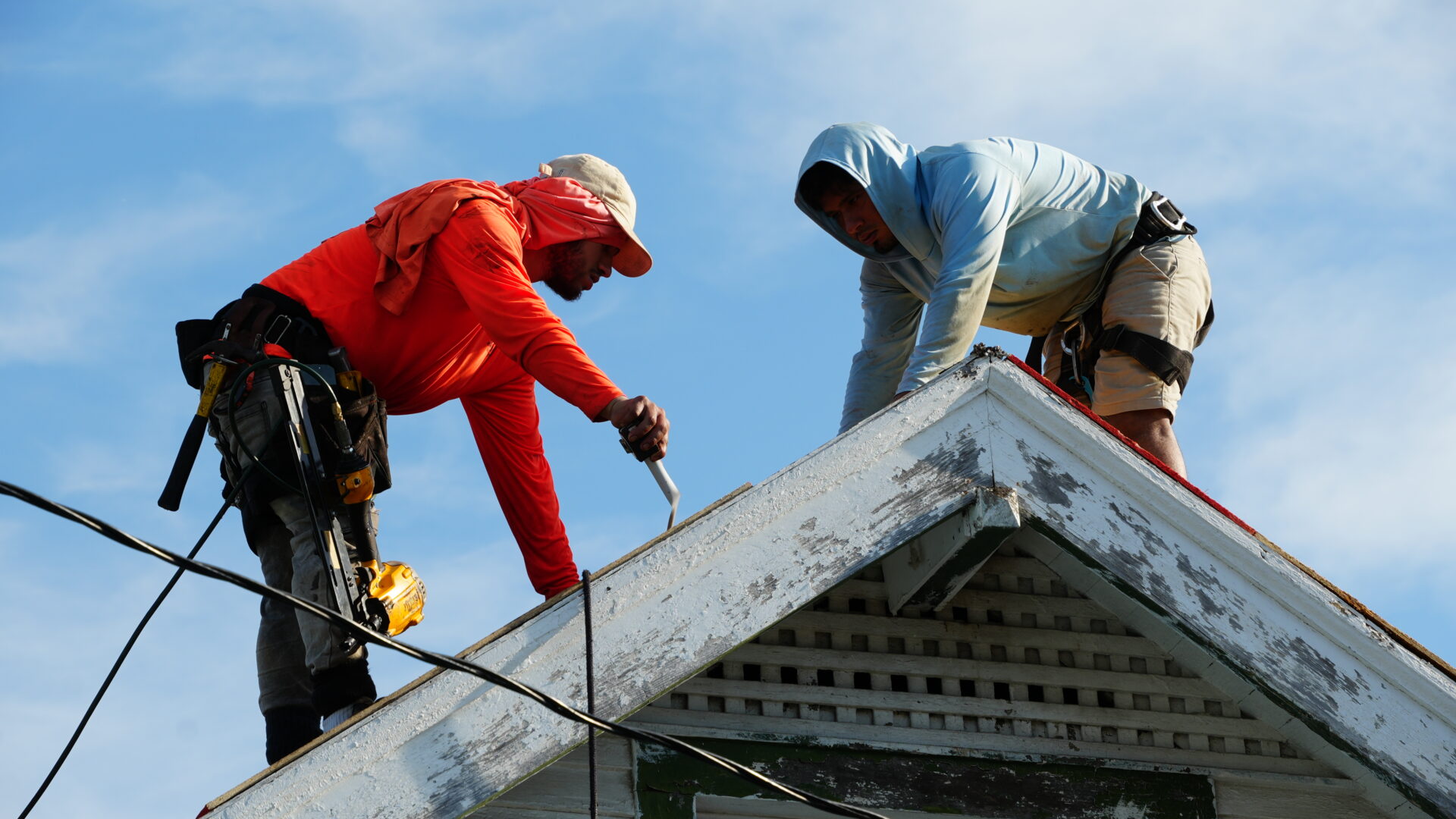
For example, fortified roofs that are designed to prevent damage from high winds, hurricanes, hailstorms, severe thunderstorms and tornadoes, can be installed on historic buildings. The Louisiana Department of Insurance is funding a $10,000 lottery-style grant for homeowners who install a fortified roof on their home, and hopefully the program will continue to expand. The lottery opened on Sept. 2 and closed on Sept. 12. The more roofs of this kind installed, the more likely it is residents will see discounts on insurance rates.
The PRC was one of many local organizations that mobilized immediately after Katrina to get families back into their homes. Now, the PRC’s work to keep people in their homes remains more crucial than ever, educating about and advocating for smart preservation practices that save what has worked in the past while integrating what New Orleans needs for the future.
This article was first published in the Times-Picayune Opinion section on September 19, 2025. Link.