


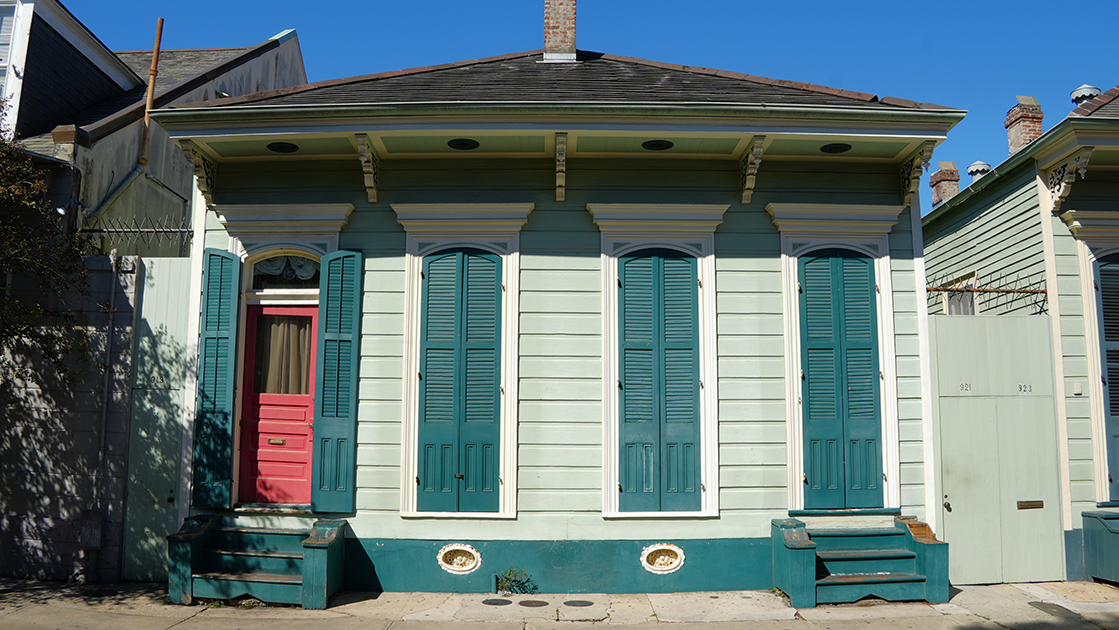
On the morning of March 15, 1891, a crowd pushed through the door of a four-bay, bracketed shotgun cottage on Bourbon Street. The Times-Democrat noted, “People came from far and near, all classes and both colors, and so great was the rush on the place for admission that some friends arranged the crowd in a double rank.”
The line had been moving since 10:00 the night before, a steady stream of gawkers, interlopers, and mourners. Some were there to pay their respects to Antonina Caruso, newly widowed, her mother-in-law, and brother-in-law Vincent. Most just wanted to be able to say they caught a glimpse of the body and participated in the spectacle.
Thirty-seven-year-old James Caruso lay in a metal casket in the parlor, his body riddled with 42 bullets. He was one of 11 men who had been murdered at the parish prison the day before in what would become the largest mass lynching in U.S. history.
James and many other Italian immigrants were being held for the murder of NOPD Superintendent David Hennessy. Several had been found not guilty and were awaiting release. James had not yet stood trial.
Whether or not the men had been involved in the murder would never be known. The charges stemmed from the prejudice New Orleanians held toward Italians, the ongoing violence in the Italian community, and the fact that a bystander claimed Hennessy had uttered the word “Dago” after being shot.
Following Hennessy’s murder, Italians associated with the Matrangas and Provenzanos, rival factions whose altercations frequently turned violent, were arrested, and many Italians unassociated with those families were also rounded up. Outraged by outcome of the trial of the first group of Italians, prominent New Orleanians called for a mass meeting on Canal Street. They delivered inflammatory speeches and ultimately led a lynch mob to the prison.
James Caruso had arrived in New Orleans as a child in 1867 with Maria Petrie, his widowed mother, and several siblings. His father, Rosario Caruso, a prominent importer of lemons, died shortly before the family departed Palermo. James was a fruit laborer at a stand in the French Market, while his brother Vincent worked as a stevedore on the fruit docks.
As immigrant orphans, the Carusos struggled to survive in a city where prejudice against Italians was rampant.
George Provenzano, a fruit merchant, offered them work and support. But when James chose to part ways with Provenzano and work for his rival Matranga, things turned ugly.
Provenzano associates harassed him, and gunfire broke out. In 1890, the Caruso brothers, along with other Matranga employees, were fired upon by the Provenzanos on Esplanade Avenue. Vincent was wounded and lost the use of one of his legs.
While James Caruso certainly worked for Matranga, his involvement in the Hennessy murder remains questionable. He may have participated in the attack or known something about it. Or the murder may have been perpetrated by the Provenzanos. In fact, it is even possible Italians had been scapegoated. Because of vigilante justice, the truth will likely never be known.
James’ widow, Antonina Falcone, had only her in-laws to comfort her. She and James had no children. Her siblings were in Sicily. Antonina left Palermo in 1881. It is unknown whether her parents, Francisco Falcone and Dominico Veizi, were still living at the time.
She was 24 years old when she arrived in New Orleans and took on work as a servant. Antonina and James Caruso married on Nov. 15, 1884. Instead of the Americanized James, the judge recorded Girolamo on the marriage license. James became a citizen in 1886. He participated in politics and regularly voted. For a time he was a commissioner of elections in the 5th ward. Yet New Orleanians saw him not as a citizen with rights under the law but as foreigner deserving to be executed without a trial.
At 2 o’clock in the afternoon, a priest arrived and administered last rites. Fifteen carriages arrived outside the door to accompany the hearse to St. Louis Cathedral. Overcome by the loss of his brother, Vincent found he could not walk to the carriage and had to be assisted. Antonina was so grief stricken she was unable to attend the funeral Mass or James’ interment in St. Vincent de Paul Cemetery.
Antonina moved from the Bourbon Street cottage to a rented room on Chartres Street. She found she could not cope with the loss of James, his brutal death, and the scandal and sensationalism surrounding it.
In July, she took a dose of laudanum and told her neighbor to send for a priest, as she was going to be with her husband. Instead, the neighbor sent for an ambulance, and Antonina was brought to Charity Hospital, where they used electricity to revive her. Her life hung in the balance for days. Vincent’s wife sat at her bedside during her recovery. Newspapers learned of her suicide attempt and reported it.
Several years later, widows and family members of the men who were lynched sued the city. Antonina was among them. They received a few thousand dollars each, but nothing could erase the trauma they endured.
Antonina eventually remarried. Her husband, Peter Costa, was found dead in their home while she was away visiting relatives in Sicily. At first foul play was suspected, but it was ultimately concluded that Costa died of natural causes. In 1906, Antonina was married a third and final time to Joseph Lopiccolo.
She and Lopiccolo owned a grocery on the corner of Mandeville and Royal streets. Her will, prepared in 1906, left all her property, which consisted of the contents of the grocery and barroom and the lot and building, to Lopiccolo. Antonina died on March 18, 1908. After having endured the pain of notoriety, no obituary was printed upon her death.
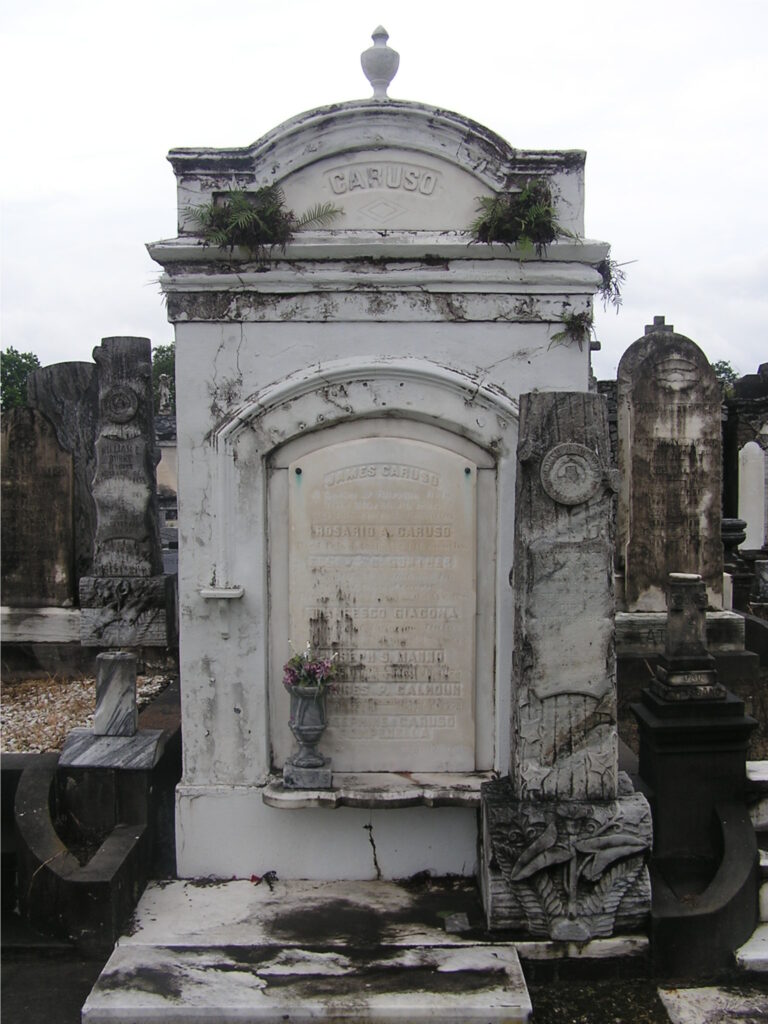
Vincent Caruso had his brother James’ remains brought to the family tomb in Greenwood Cemetery. James lies there with his beloved brother, sister-in-law, and nieces and nephews.
Katy Morlas Shannon is a freelance author and historian.