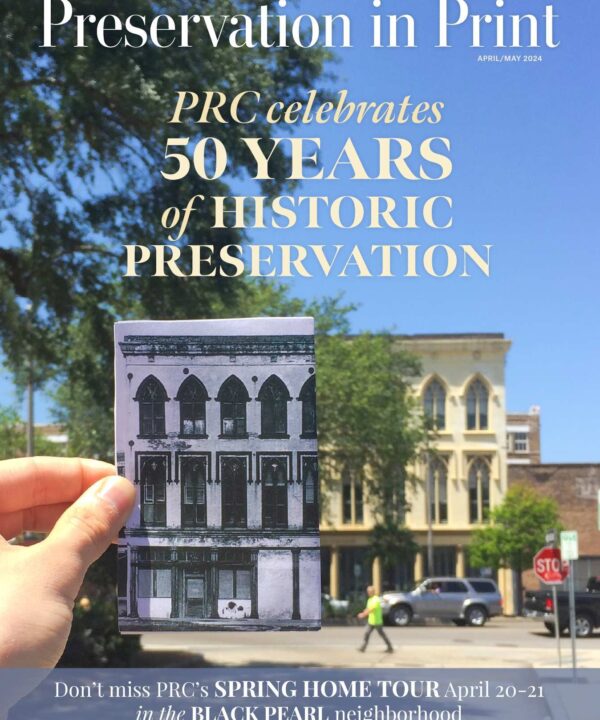

Preservation has been the main catalyst for economic development and revitalization in New Orleans for more than 50 years. The Preservation Resource Center has been a leader in advocacy, education and programming around this premise since 1974. However, our cumulative results were possible only because of the creation of local historic districts. This year marks the 50th anniversary of the Historic District Landmarks Commission (HDLC). Its mission is to “regulate, preserve and protect historic districts and landmarks in the city of New Orleans.” The mayor and New Orleans City Council codified the HDLC by ordinance in June 1976.
At that time, the French Quarter was the city’s only recognized historic district. It was overseen by the Vieux Carré Commission, established in 1925. However, the VCC did not receive regulatory authority until 1936, when it was enshrined in the state constitution.
Today, 18 local historic districts encompass 47,719 buildings, and the city has 300 individually nominated and designated landmarks. These local districts are within 26 National Register districts. However, National Register districts offer no protections. Protections come only through local districts overseen by the Historic District Landmarks Commission. Historic districts cover roughly 40% of New Orleans’ developed area.
Historic districts also pave the way for the use of historic tax credits. In New Orleans, these credits have been a catalyst for neighborhood revitalization, most visibly the redevelopment of the entire Warehouse District. After Hurricane Katrina, we saw $1 billion in historic tax credits invested and more than 1,400 apartment units created, many of them affordable. This past year, Louisiana ranked second in the country for use of historic tax credits, behind only New York.
The numbers only tell part of the story. The real story is how this came about through the concerted efforts of individuals, neighbors, neighborhood associations and civic leaders concerned about rampant demolitions and destructive projects that were ruining the sense of community in the 1960s and 1970s. Historic districts and the commission that protected them were a means of self-determination for a community and a city.
A similar movement was taking place at the national level. The National Historic Preservation Act was passed in October 1966. Through Section 106, the act created a framework for protecting our heritage. Section 106’s intent was to protect the country’s historic fabric through community and stakeholder participation at the local level. It acknowledged that historic preservation was part of our value system and that protecting it required a pathway for local participation in any project receiving federal funds.
Section 106 created a framework that local communities mirrored in their regulations. It fostered local historic districts and created a framework for state historic preservation offices to be established, providing further support at the local level.
After Katrina, Section 106 was vital to ensuring that federal investment would not harm our city’s historic fabric. During this period, tens of thousands of buildings were slated for demolition using federal funds. To satisfy Section 106 requirements, FEMA, the National Park Service and the state historic preservation office (SHPO) created a digital mapping tool of all historic properties, tracking eligibility, structural status and damage.
This tool had another benefit: It identified other areas of the city that would be eligible for historic district status. It effectively paved the way to expand the boundaries of the existing districts of Broadmoor, Bywater,
Carrollton, Esplanade Ridge and Holy Cross. It also allowed for the creation of new districts such as Pontchartrain Park, giving that neighborhood and areas in the expanded districts access to historic tax credits. At a time of massive federal investment, this was paramount to ensuring that we rebuilt in a community-centered way, protecting our culture and way of life.
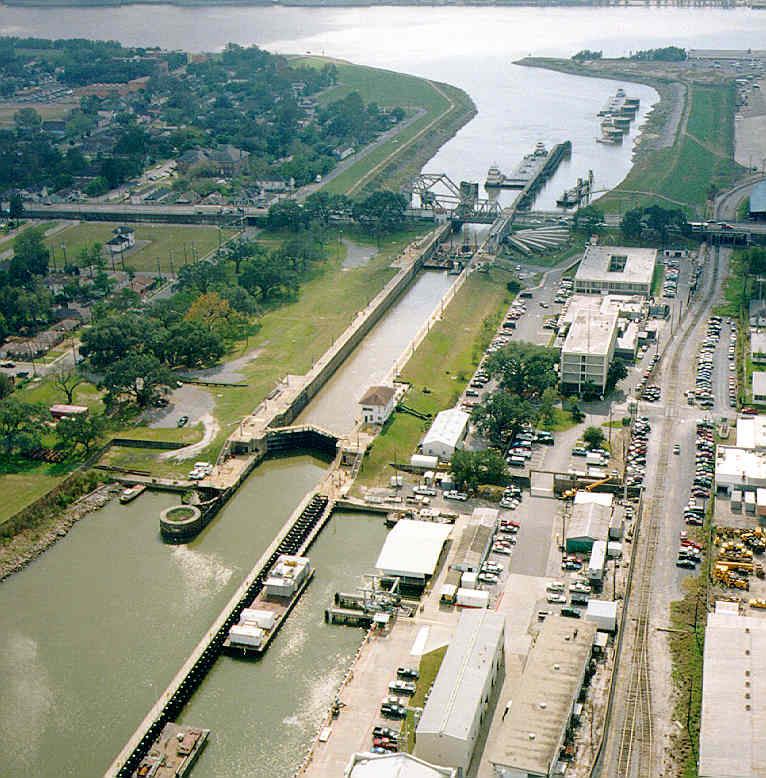
Recently, Section 106 has been used to ensure that neighborhood and advocacy groups are at the table for the proposed widening of the Industrial Canal, a project that could involve 30 years of construction and negatively affect the surrounding historic districts of Bywater and Holy Cross.
But today, Section 106 is under threat from the federal executive branch. It is proposing to rewrite the rules and regulations so it can build a ballroom, an arch and deface the Eisenhower building without public input.
If this occurs, what would it mean locally?
Consider two federally funded projects in New Orleans: one before the passage of the National Historic Preservation Act and before local historic districts, and one after.
In the late 1950s, planning began for a new Interstate 10 system. Part of the plan was to build the expressway down Claiborne Avenue in Tremé, a thriving Black middle-class neighborhood and arguably the most important, culturally significant community in America. Before the passage of the National Historic Preservation Act, the state used federal funds to acquire property for construction. There was no public process and no recognized historic district.
On Ash Wednesday 1966, 155 properties were razed to widen the neutral ground, and more than 200 oak trees were removed to begin construction. Hundreds of families were displaced. More than 500,000 square feet of property was taken off the tax rolls. In 1960, there were 132 registered businesses; by 2000, there were 35. The project was completed in 1968. In the years that followed, property values plummeted, and vacant and blighted housing skyrocketed in Tremé and the surrounding 7th Ward.
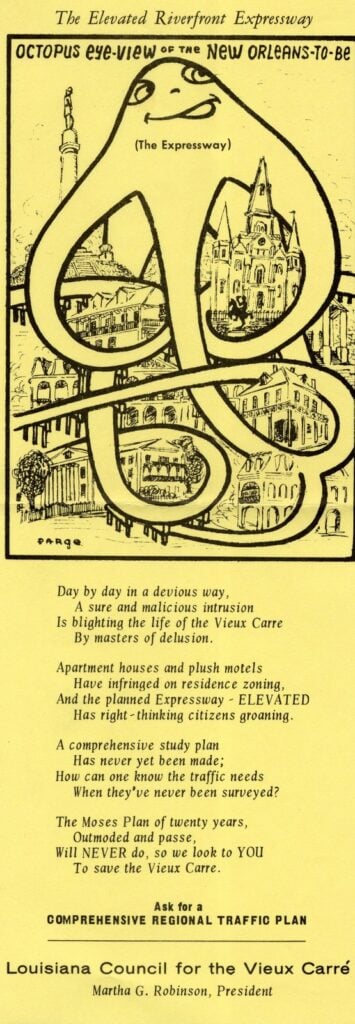
Compare that with the two-decade preservation fight known as the Second Battle of New Orleans. In 1947, New Orleans city leaders hired Robert Moses to design an inner-city freeway. His solution was a riverfront expressway, 40 feet high and 108 feet wide, in front of St. Louis Cathedral, effectively cutting the French Quarter and surrounding neighborhoods out of the city. The federal government and city leaders adopted the plan and began actively pursuing it in 1957. By 1961, local preservation groups and activists were in opposition. The next eight years saw an epic legal battle against the city’s civic and political leadership.
Because the Vieux Carré was a recognized historic district, the passage of the National Historic Preservation Act in 1966 gave opponents tools to fight. In 1969, the federal Department of Transportation canceled the project, citing harm to the “tout ensemble” of the Vieux Carré — even though the New Orleans City Council had approved the project just weeks before.
The HDLC’s 50th anniversary asks more of us than a look back. The neighborhoods we value did not survive by chance, and their future can’t be left to decisions made without the people who live in them. Local protections and federal review are different tools, but both give us a way to participate. Our responsibility now is to defend those opportunities — and make sure every neighborhood has a voice in what comes next.
Love This Story? Get Preservation in Print.
This article originally appeared in Preservation in Print, the Preservation Resource Center’s award-winning magazine celebrating New Orleans’ architecture, neighborhoods, and cultural heritage.
Become a PRC member today and receive six issues delivered straight to your door throughout the year, with inspiring stories of preservation, local history, and the people keeping New Orleans’ unique character alive.