
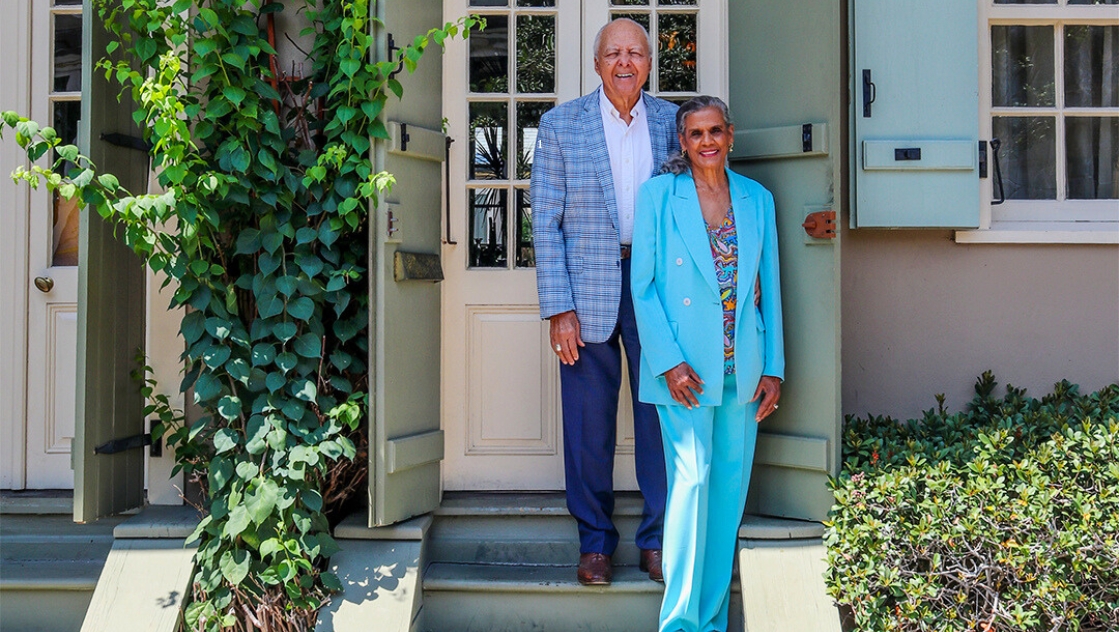
The Creole cottage in the 1200 block of Henriette Delille Street in Treme looks like it’s been there for as long as the neighborhood has been around.
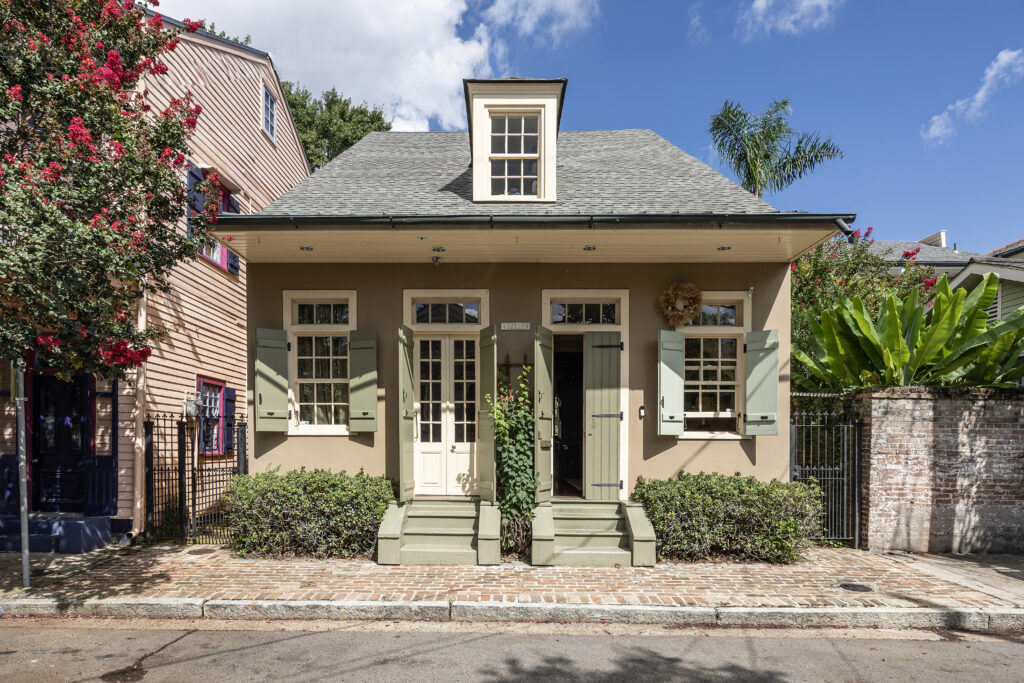
Ask Adolph and Naydja Bynum how old it is, though, and the answer will surprise you: just 25 years.
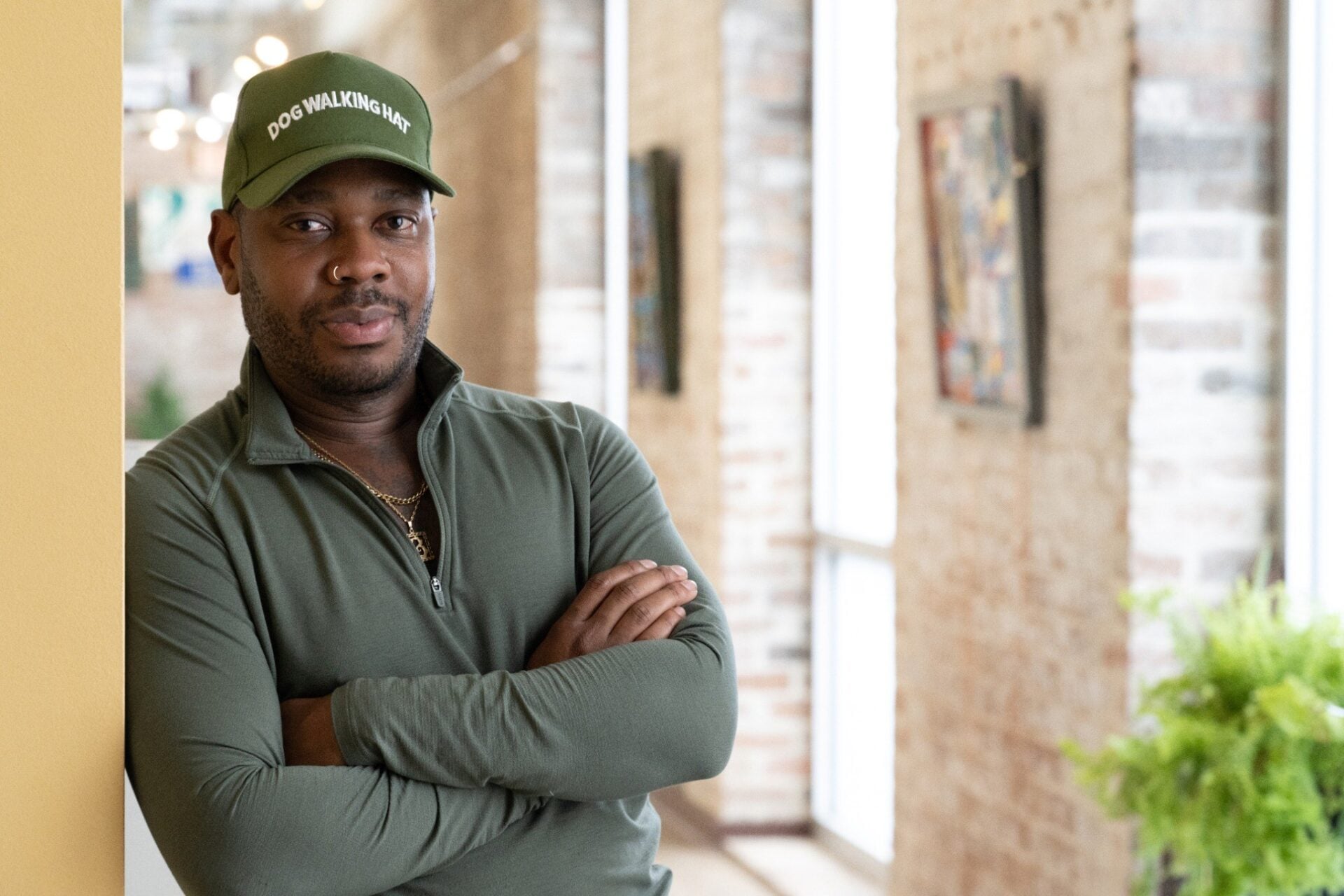
“I’ve had a lot of architects tell me ‘That’s a nice renovation,’” Adolph Bynum Sr. says with a smile.
While the home was built from the ground up a quarter-century ago, he has spent nearly twice as long as that restoring homes in Treme that are significantly older.
Since the late 1970s he’s redone about 16 properties. Some he’s kept and rented. Others he’s sold. Another — a camelback double on Marais and Barracks streets — is being worked on right now.
“We call each of our houses our child,” he said, referring to the love he and Naydja have for the homes they’ve worked on.
It was never his or Naydja’s intention, though, to save so many properties in Treme or become boosters for the historic neighborhood, which was recognized by the city in 1812.
‘MY OWN OASIS’
The only reason Adolph Bynum wound up there was because parking in the French Quarter, where he wanted to buy a place, was difficult. He found that was easier in the blocks across North Rampart Street.
“That’s why I never got to the Quarter,” he said.
It was regular trips to the French Quarter with his mother, Inez Fields Bynum, that unknowingly laid a foundation for his interest in preservation.

His mother would point out elements of historic buildings during those visits to the city’s oldest neighborhood. While young Adolph grew to appreciate the city in which he grew up, he didn’t set out to be a preservationist.
He attended Xavier University and became a pharmacist like his dad, Horace Bynum Sr., and opened his own drug store with the help of his father in the Desire area in 1961. (It remained in operation until Hurricane Katrina in 2005.)
He bought a house in Pontchartrain Park. When he wanted to move, his friends urged him to stay near the lakefront. But he wanted a place in the Quarter, where he’d spent so many days as a 7- and 8-year-old child learning about architecture from his mother.
But the lack of easy parking was a turnoff. Bynum set his sights on Treme.
“All my friends thought I was nuts,” he said, noting that the area was known more for blight and crime than its history in those days, but he had a gut feeling. “I told them, ‘Someday the value of this area will be sky high.’”
He bought a yellow cottage in the 1200 block of what was then St. Claude Avenue, now Henrielle Delille, and began to restore it.
“I’ll make my own French Quarter,” he thought to himself.
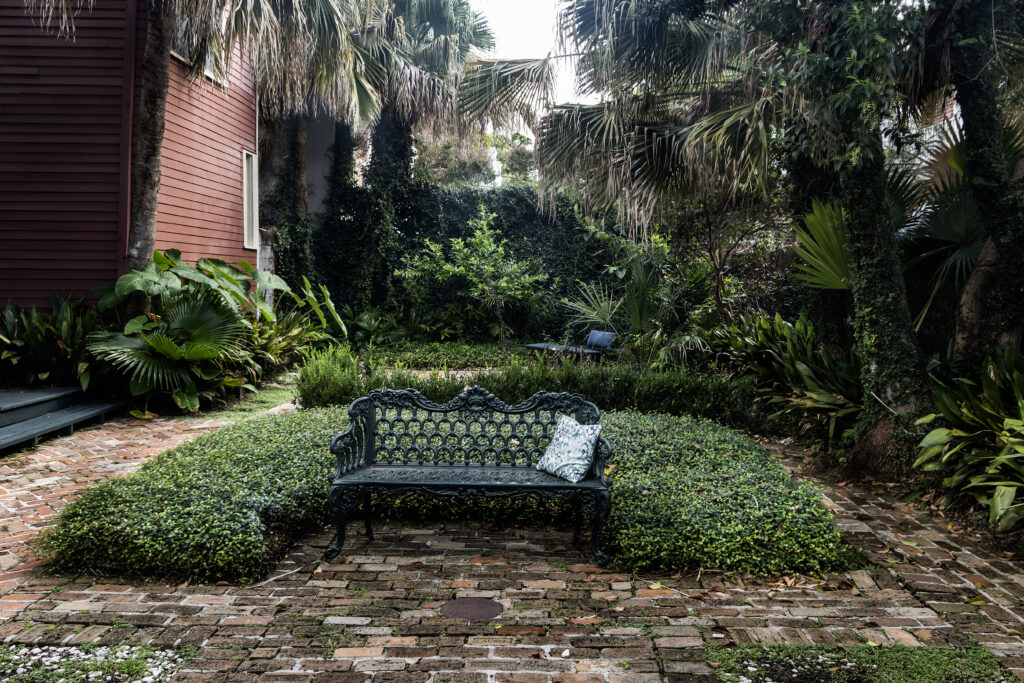
Soon he added additional buildings on the block and wound up joining the yards, creating one large courtyard, reminiscent of those in the Quarter.
“I made my own oasis,” he said.
‘YOU’RE A PRESERVATIONIST’
His renovation work caught the eye of Patty Gay, the Preservation Resource Center’s longtime director, and Muffin Ballart, a longtime PRC supporter and former board president, who asked him to give a presentation about buying historic properties.
“You’re a preservationist,” he remembered Gay telling him after that talk.
“I am?” he asked.
“You sure are,” he recalled Gay telling him.
He became more and more involved with the PRC, eventually serving on its board of directors and various committees in the early and mid 1990s.
It was around that time he met the woman who would become his wife.
Naydja Bynum was born in New Orleans and also developed a love of the city’s historic architecture as a child thanks to her father,John Domingue Sr., and his career as a carpenter.
She remembers doing work with him and her brothers at times, sanding floors and helping with other aspects of a job.
Naydja Bynum made her career in the medical field, serving as a nursing educator and administrator at hospitals in New Orleans, Baltimore and Los Angeles.
Her time on the east and west coasts was formative. She said she realized the city’s older housing stock was more than just charming. It offered more value for less money.



The building that houses the Backstreet Cultural Museum is one of the properties the Bynums have restored. (Charles E. Leche/Preservation Resource Center)
A courtyard behind a row of homes the Bynums have renovated. (Charles E. Leche/Preservation Resource Center)
An 1890s home that the Bynums are restoring. (Charles E. Leche/Preservation Resource Center)
One of the first properties in Treme that Adolph Bynum restored. (Charles E. Leche/Preservation Resource Center)
The inside of the ‘She Shed.’ (Charles E. Leche/Preservation Resource Center)
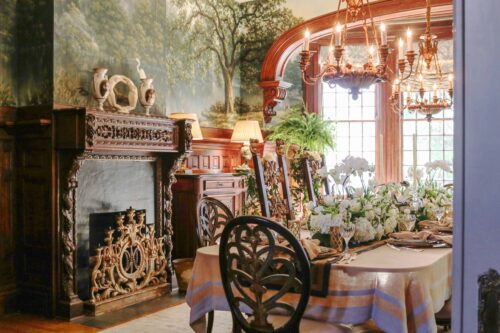
The living room of the Bynums’ Creole cottage in Treme. (Liz Jurey/Preservation Resource Center)
“Because I left I got to appreciate New Orleans more,” she said.
She met Adolph in the mid-90s and the two quickly bonded over their professional backgrounds in the medical field and passion for preservation.
“Our dates were driving around neighborhoods looking for ‘for sale’ signs,” Adolph Bynum said.
Naydja would follow Adolph onto the PRC’s board, eventually serving as president, all while continuing to buy and restore properties across the city while working on a doctorate degree in nursing at LSU Medical Center.
“I’m a nurse. I help people get well,” she said. “Now I get homes well.”
Aside from their work rehabbing homes, the Bynums have also become boosters for Treme.
They’ve served on the board of the Historic Faubourg Treme Association and founded the Treme Fall Festival, which celebrates its 10th anniversary this year on Saturday, Oct. 25.
Proceeds from the festival are reinvested in the neighborhood through eight to 10 grants to cultural and educational organizations and more.
For example, during the last decade, the festival has granted more than $100,000 to St. Augustine Church, which remains closed and in need of repairs after Hurricane Ida in August 2021.
Grants have also gone to the New Orleans African American Museum, the Backstreet Cultural Museum, St. Anna’s Episcopal Church for its musical programs, Treme’s Petit Jazz Museum and others. Various second-line groups, the Baby Dolls and Mardi Gras Indian groups have also been recipients.
“We got a lot of history, a lot of culture here,” Naydja Bynum said.
But the strongest way the Bynums have helped the neighborhood is by simply being there.
NO PLACE LIKE HOME

The Bynums’ being there was solidified when they built their home just before Katrina.
A Creole cottage once stood on their property but was bulldozed at some point, likely in the 1950s. That’s about the time a one-story slab house — perfect for a suburban setting — was put up.
But it didn’t fit in with Treme at all. The Bynums eventually bought it and tore it down.
They presented plans to the appropriate city agencies to build a new Creole cottage, one inspired by another in the same block that Adolph Bynum had renovated years earlier.
“They (city officials) said Mr. Bynum, if you can do that, no problem,” he said.
Outside, the home is covered in tan stucco and has green shutters, which were custom made at a millshop in Folsom.

The floors inside are Brazilian cherry, while cabinets are made of cypress. “Everything was tailor-made,” Adolph Bynum said.
A wall in the dining room is done in a brick-between-post style, an homage to the neighborhood’s historic building practices. “We did one wall like that to make it look like a Creole cottage (inside and out),” Naydja Bynum said.
Another project the Bynums are proud of is what they call the “She Shed” at Ursulines Avenue and North Robertson Street.

The two-story building, now painted a bright shade of lavender with gold trim, was boarded up for years and left to fall apart after being used as a barroom.
In a past life, it was home to Alphonse Picou, an early pioneer of jazz who lived there with his daughter.
These days the Bynums use it as an event space and rental property after they restored it.
A CHANGING NEIGHBORHOOD
The historically-Black neighborhood — which the City Planning Commission defines as being bounded by North Rampart Street, Esplanade Avenue, North Broad Street and St. Louis Street — has seen a lot of change since Katrina.
According to U.S. Census data, the population dropped from 8,853 in 2000 to 5,849 during a survey conducted between 2019 and 2023.

In the same time, the Black population has gone from 93 percent to 58 percent, while the White population has increased from 5 percent to 28 percent.
Other figures show an increase in home ownership in the neighborhood, an increase in salaries and an increase in education levels.
Regardless of what any statistics say, Adolph Bynum said he hopes people will see the value in Treme and invest in it.
“It’s the center of the city. I can get anywhere I need to go. I know my neighbors, and we look out for each other,” he said. “There’s a lot of good.”
Danny Monteverde is editor of Preservation in Print.