


On August 27, 2026, the Preservation Resource Center joined an unprecedented coalition of more than 600 Tribal Nations, preservation and conservation organizations, professional associations, businesses, museums, historical societies, and state and local organizations to deliver an open letter and brief to every member of Congress with a blunt message: Section 106 works. Congress should protect it, strengthen it, and build on 60 years of success.
View the pdf version of the letter here.
For more information about the fight to Defend Section 106 and NHPA you can go here.
If your organization would like to sign onto this letter, please complete the form here
Three Threats. One Historic Choice for Congress.
An Open Letter & Brief to Congress
from a National Coalition to Protect and Strengthen
Section 106 of the National Historic Preservation Act
August 27, 2026
Dear Members of Congress:
America’s historic preservation law—and the places in your state and district that it protects—face their greatest threat in sixty years.
Since 1966, Section 106 of the National Historic Preservation Act (NHPA) has carried out a remarkably simple idea: before the federal government allows a project to permanently harm a place that matters to the American people, it should first listen to those who know that place best, understand what would be lost, and consider whether the harm can be avoided.
Section 106 applies when a federal agency carries out, funds, licenses, permits, or approves a project that may affect historic properties. It requires the agency to identify affected historic places, assess potential harm, and consult with Tribal Nations, state and local officials, property owners, experts, and the public about ways to avoid or minimize it. It does not dictate the outcome or give preservationists a veto; it requires the government to make an informed decision before irreversible harm occurs.
That process has never prevented America from building. It has helped America build more responsibly while protecting the places that define the American experience. We ask you to stand up for Section 106 now, when it has never mattered more.
Our Coalition
We write as an unprecedented coalition of more than 600 public, private, and nonprofit-sector organizations and Tribal governments. Some of our signatories themselves represent hundreds of additional organizations. Together, our members and citizens number more than 5 million Americans living, working, and voting in every Congressional district in the country. We include Tribal Nations and Native organizations; state and local government agencies; preservation, conservation, and Main Street organizations; professional associations of archaeologists, architects, landscape architects, anthropologists, historians, and museum professionals; and private businesses of all sizes in the cultural resource management industry.
Our coalition did not exist six weeks ago. Today it brings together constituencies who have rarely spoken with one voice. We intend to remain organized, engaged, and visible until the threats have passed—and then to work together to secure stronger preservation laws for the future.
Our Ask – Up Front
We respectfully call on Congress to reject efforts underway through regulation, legislation, and executive action to dismantle the National Historic Preservation Act, one of America’s most successful bipartisan conservation and good-government laws:
- Reject the Advisory Council for Historic Preservation’s proposed regulatory gutting of Section 106 of the NHPA. Record your opposition during the Office of Information and Regulatory Affairs’ review and the public comment period, now underway.
- Reject statutory changes that weaken Section 106, whether advanced independently or as part of a broader permitting package.
- Defend Congress’s constitutional authority against executive efforts to narrow, circumvent, or evade the preservation laws Congress enacted.
- Seek genuine improvements to Section 106 based on facts and data to make review more valuable and efficient without trading away the rights, voices, and protections that make the process meaningful.
What Is at Stake
The places Section 106 protects are not isolated landmarks or museum pieces. They are the physical fabric of America itself. They are the Tribal sacred landscapes, ancestral villages, and burial grounds that tell the story of this continent long before the United States existed. They are the battlefields where the nation’s fate was decided and the churches where movements for civil rights and social justice took root. They are the factories, farms, mills, rail depots, and shipyards that powered the American economy. They include Main Streets, courthouses, neighborhoods, schools, parks, bridges, archaeological sites, cultural landscapes, and downtowns that give communities their sense of orientation and identity.
The historic properties the NHPA protects include 2,500 internationally recognized National Historic Landmarks, from Temple Square in Salt Lake City, to the Taos Pueblo in New Mexico; from Harper’s Ferry National Historical Park in West Virginia to The Breakers in Rhode Island. But the places saved by Section 106 also include tens of thousands of locally cherished places that define what it means to live in—and love—a particular community. These places exist in every congressional district in America. They are where Americans gather, worship, mourn, celebrate, remember, reknit bonds after division and loss, and pass their stories from one generation to the next.
America’s historic places are not obstacles to America’s future. They are among the things that make America worth building.
Indeed, hundreds of thousands of Americans make their living conducting the meaningful work of preserving, restoring, and interpreting these places, generating billions of dollars in economic activity.
Weakening Section 106 is not an abstract policy debate. Weakening Section 106 threatens irreplaceable historic places. It threatens Tribal rights. It threatens local economies. It threatens livelihoods. And it threatens Congress’s bipartisan principle that Americans deserve a voice before their shared heritage is permanently harmed.
Section 106 Now Faces Three Simultaneous Threats
Section 106 is confronting three distinct but converging efforts to weaken it. Standing alone, each deserves your attention. Taken together, they represent the most significant challenge to America’s cultural heritage protections in sixty years—and demand a response equal to the threat.
1. The Regulatory Threat
The ACHP’s Proposed Rewrite Would Fundamentally Undermine the Law
On July 24, the ACHP approved a total re-write of the Section 106 regulations disguised as a modernization effort. The proposal does not simply streamline consultation; it guts it. It fundamentally redistributes authority away from Tribal Nations, states, local governments, and the public while concentrating unprecedented discretion in federal agencies—and thereby increasing the influence of the project proponents those agencies are charged with regulating.
If adopted, the proposed regulations will:
- Give federal agencies unilateral discretion to decide whether to notify the public at all or provide any opportunity for public comment before approving private or public development projects that damage or destroy historic places.
- Allow developers to secure federal approvals without first meaningfully exploring ways to avoid or minimize harm, eliminating a longstanding safeguard for historic buildings, neighborhoods, archaeological sites, and sacred places.
- Eliminate the guaranteed right of state and local governments to be notified and participate when federally approved development threatens historic places within their own jurisdictions.
- Eliminate the federal government’s requirement to consult with Tribal Nations or seek their expertise about their own sacred places and other culturally significant resources before approving projects that may damage or destroy them.
- Exclude entire categories of historic places from meaningful consideration, including battlefields, cultural landscapes, and places like the Grand Canyon, because they are not “geographically compact” or centered on a built structure.
Bottom Line: The proposal does not modernize Section 106. It weakens the consultation, transparency, and accountability that Congress deliberately built into the law.
These defects cannot be cured through tinkering at the margins. Our coalition opposes the rewrite at its foundation. If not nullified by Congress, we intend to defeat this effort in the courts.
Learn More
- National Media Coverage: The Atlantic; The Washington Post; CNN; The New Republic; The Architect’s Newspaper; CBS News; NPR; Law360; PBS NewsHour; The New York Times; Native News Online.
- Legal Analysis Webinar
- Tribal Harms Webinar
- National Trust for Historic Preservation Statement on ACHP Proposed Revisions to Section 106 of NHPA
- National Conference of State Historic Preservation Officers’ The End of Section 106 As We Know It?
- National Association of Tribal Historic Preservation Officers’ NATHPO Votes “No” On Proposed Section 106 Regulations
2. The Statutory Threat
Congress Should Demand Hard Evidence Before Rewriting a Successful Law
Reports indicate that some members of Congress are seeking to simultaneously gut Section 106 through permitting reform negotiations. But Congress should consider whether the purported motivations for sweeping revisions to the National Historic Preservation Act are grounded in facts.
That inquiry has never been more important. Congress is being urged to amend a law that has guided federal decision-making successfully for sixty years before conducting a comprehensive review of whether the law itself is responsible for the harms its critics allege.
That is backwards. Before considering statutory changes, Congress should first:
- Examine actual Section 106 review times across multiple states and federal agencies.
- Determine whether delays are truly caused by preservation reviews occurring in states and communities—or by incomplete project applications, poor project planning, understaffed federal agencies, or unrelated permitting requirements.
- Hear directly from the people on the ground: Tribal Nations, State and Tribal Historic Preservation Officers, local governments, preservation professionals, communities, in addition to federal agencies and industry developers.
- Consider reforms based on actual data that improve efficiency without sacrificing consultation, transparency, or accountability.
- Understand streamlining tools and efficiencies already available, including programmatic agreements, alternate procedures, program comments, program alternatives, and exempted categories.
Regulations can be revised. Statutes are much harder to repair.
If Congress weakens Section 106 now, those changes could outlast the current Administration and the current political moment. Congress should demand evidence—like the hard data we provide below—and reject any proposal that purports to achieve speed by sacrificing consultation, transparency, Tribal rights, or meaningful consideration of historic places.
Bottom Line: Congress should reject proposals that weaken Section 106. Reform should improve efficiency without sacrificing the rights and protections at the heart of the law.
3. The Executive Threat
The Executive Branch Is Testing the Limits of Congressional Authority
While Congress debates whether Section 106 should be weakened, the Executive Branch has begun testing a different proposition altogether: Whether it may simply avoid the law. That question should concern every Member of Congress, regardless of party, and is larger than any individual project.
Congress must reject the President’s efforts to narrow the reach of statutes enacted by Congress, not through legislation, but through executive action. Recent examples illustrate the pattern:
- The demolished East Wing and proposed White House Ballroom, where litigation has challenged efforts to alter one of the nation’s most historically significant complexes without Congressional authorization. See: CNN, PBS, Fox News, Reuters, and NPR.
- The Eisenhower Executive Office Building, where the Administration is advancing a sweeping legal theory under which a President may sidestep historic preservation and environmental laws simply by routing favored projects through the White House itself rather than federal agencies Congress charged with enforcement. See: Letters From an American; The Washington Post; CNN; People; and NBC.
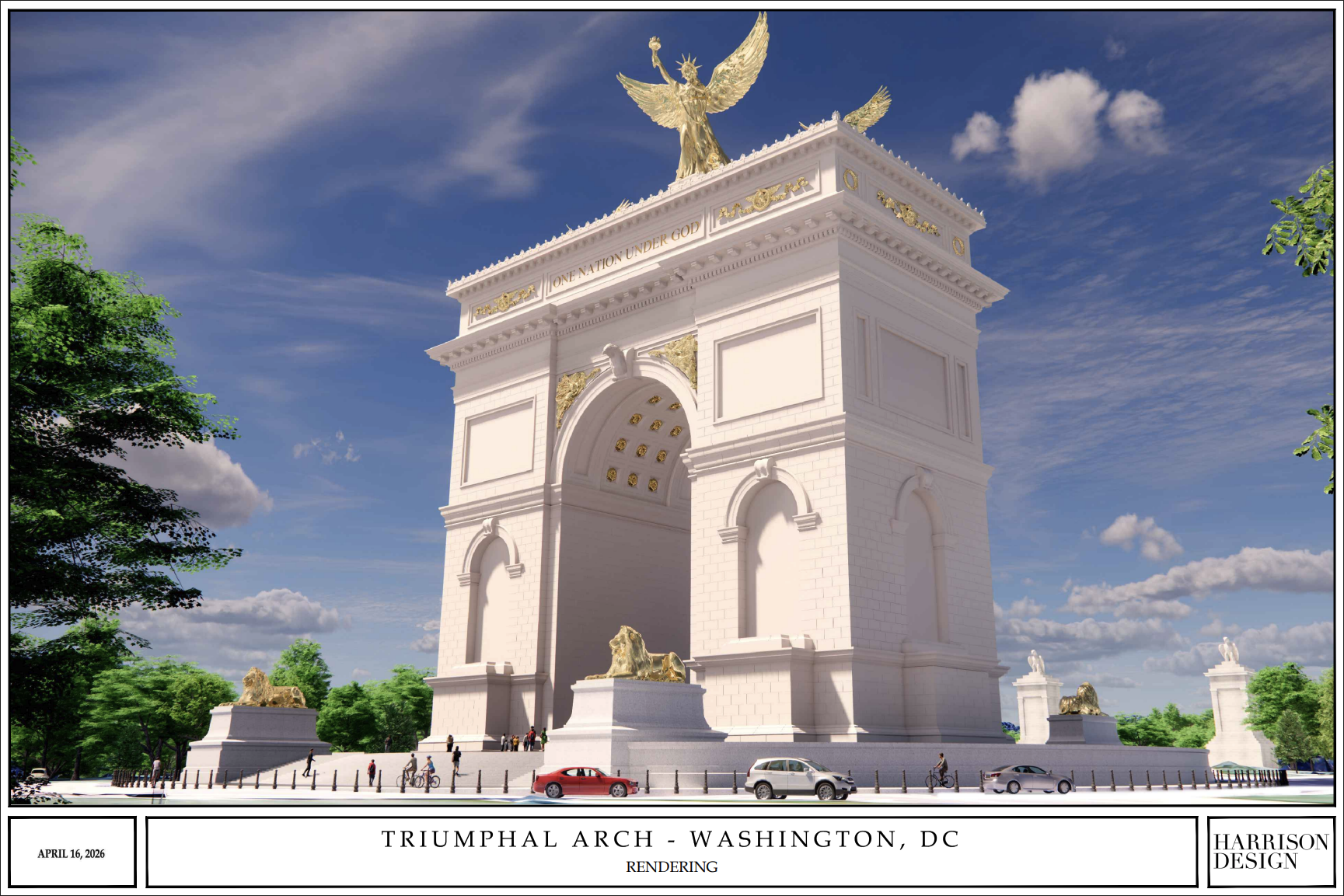
- The Arch, where the Administration has advanced a nationally significant project affecting Arlington National Cemetery, the Lincoln Memorial, and 37 other historic sites while shortchanging the review processes Congress required for projects of this magnitude. See: CNN, NPR, and The New York Times.
- The Kennedy Center, where federal courts concluded that the President exceeded authorities reserved to Congress, and where litigation has thus far prevented the threatened demolition of one of America’s premier cultural institutions. See: The New York Times and PBS.
In the controversies above, and numerous others, the burden of standing up for Congressional authority is falling heavily to civil society organizations, law firms, and individual Americans when Congress itself should be taking the lead.
The pattern of executive over-reach extends far beyond Washington.
In Executive Order 14156, President Trump declared a national energy emergency under a factual basis that has been widely questioned. The EO directed federal agencies to invoke the Advisory Council on Historic Preservation’s emergency procedures, reducing Section 106 consultation on projects to as little as seven days. Since February 2025, at least 870 projects across 47 states have proceeded under those emergency procedures, including strip mines, oil pipelines, and gas stations. Because those projects advanced under dramatically compressed review, there is no way to know how many archaeological sites, burial grounds, historic buildings, cultural landscapes, or Tribal sacred places went unidentified before construction moved forward.
Section 106 cannot protect what agencies never take the time to find.
Bottom Line: Congress should not weaken Section 106 while the Executive Branch is simultaneously testing how broadly it may exempt itself from the law altogether.
The Case for Weakening Section 106 Collapses Under Scrutiny
Those who would weaken Section 106 justify their efforts with three specious claims:
- Section 106 consultation delays projects;
- The process generates too much litigation; and
- Historic preservation stands in the way of economic growth.
The evidence tells a very different story.
Myth #1: Section 106 Routinely Delays Projects
Reality: The overwhelming majority of projects move through Section 106 quickly, and very few require extensive review.
The National Conference of State Historic Preservation Organizations conducted a nationwide survey completed by 40 SHPOs that found that while those offices processed more than 94,000 Section 106 projects in a single year, they completed reviews in an average of just 16 days. That is roughly half the 30-day review period provided under the regulations. Nearly 95 percent of the SHPOs reported average review times within the regulatory timeframe, and nearly 80 percent averaged 21 days or less.
This same survey demonstrated that just as importantly, the overwhelming majority of projects proceed without significant preservation concerns. 97 percent of new undertakings did not result in an adverse effect determination. In other words, only about three out of every one hundred projects required the more intensive consultation that Section 106 is specifically designed to provide when nationally significant historic resources may be affected.
That is not the profile of a permitting system in crisis. And it is not evidence that justifies stripping away public, Tribal, state, and local rights in the name of speed. It is the profile of an efficient screening process that quickly clears the great majority of projects while devoting additional attention only where America’s irreplaceable historic resources are genuinely at risk.
Critics point only to the most complicated projects involving multiple states and eminent domain conflicts as “proof” for why Section 106 needs reform.
Bottom Line: Section 106 is not a bottleneck. It is a highly efficient screening system.
Myth #2: Section 106 is a Litigation Risk for Project Proponents
Reality: Section 106 litigation is extraordinarily rare.
Industry advocates cite litigation risk as a reason to weaken Section 106. The actual numbers are startling. Cultural Heritage Partners, PLLC, reviewed approximately 13 million federal cases filed over the last 35 years. Just 266 asserted a claim under the National Historic Preservation Act—an average of only 7.6 cases per year.
Against the enormous number of federal undertakings undergoing Section 106 review each year, NHPA litigation is statistically almost nonexistent. Indeed, a developer’s odds of being named as a defendant in a lawsuit involving an NHPA claim are the same as being struck by lightning over a lifetime: 0.0063%.
Even that comparison overstates Section 106’s role. In 82% of cases, an NHPA claim is just one claim among many. The cases usually concern much broader disputes.
Bottom Line: Section 106 litigation is a rare exception—not the rule. Citing litigation risk as a cause for statutory reform is factually indefensible.
Myth #3: Historic Preservation Is an Economic Drag
Reality: America’s historic places and resources are among our nation’s most productive economic assets.
Perhaps the most persistent myth advanced by lobbyists is that preservation and prosperity exist in tension. The opposite is true. Historic preservation is one of America’s most successful economic development strategies.
Decades of research demonstrate that preservation generates jobs, attracts investment, revitalizes communities, and strengthens local tax bases. Nationwide analyses of the Federal Historic Tax Credit, conducted by Rutgers University for the National Park Service, show that historic rehabilitation has leveraged more than $235 billion in private investment, supported over 3.2 million American jobs, and helped rehabilitate more than 50,000 historic buildings across the United States.
Historic rehabilitation consistently generates more tax revenue than the value of the tax credits provided while creating high-quality, locally rooted jobs requiring specialized American craftsmanship that cannot be outsourced. Those benefits extend well beyond rehabilitation projects. Historic places anchor thriving downtowns and Main Streets, attract entrepreneurs, and encourage adaptive reuse rather than demolition. They increase nearby property values and sustain locally owned businesses. They give communities the distinct identity that attracts employers, residents, and investment. Recognizing those economic returns, 38 states have adopted their own historic tax credit programs.
Heritage tourism tells the same story. A recent analysis found that heritage tourism generated more than $607 billion in travel spending worldwide in 2024 and is projected to exceed $900 billion within the next decade. In the United States alone, museums contribute approximately $50 billion annually to the national economy while supporting more than 726,000 jobs. Museum attendance exceeds by 2.5 times the total number of tickets sold for all professional sporting events and theme parks combined.
Historic places are not merely cultural assets. They are economic infrastructure.
Bottom Line: The question is not whether America can afford to preserve its historic places. It is whether America can afford to lose the jobs, investment, tax revenue, tourism, and community identity they generate.
Learn More:
- National Park Service / Rutgers 2024 Economic Report
- The ACHP’s Own Economic Impacts Study
- Forbes on the Heritage Tourism Economy
Our Coalition Has an Affirmative Agenda
Our position is not a defense of the status quo. Nor is it an invitation to negotiate over which fundamental protections of Section 106 should survive.
No governmental system is perfect. Section 106 can work better. We intend to help make it better—not weaker.
There are data-supported opportunities to improve federal review through adequate federal staffing, earlier coordination with community stakeholders, modernized digital tools, better agency guidance, improved dispute resolution, greater support for State and Tribal Historic Preservation Offices, and clearer expectations for applicants.
What will not improve Section 106 is eliminating public consultation, transparency, and Tribal participation, silencing state and local governments, or allowing avoidable destruction without first considering alternatives. Efficiency and protection are not competing principles. We reject the premise that Americans must surrender one to achieve the other.
Our coalition is developing and will publicly release an affirmative agenda for the next Congress to make Section 106 more efficient, predictable, and effective while strengthening the protections at its core.
We are ready to work with Members of both parties on improvements.
Our Ask – Revisited
- Reject the Advisory Council on Historic Preservation’s proposed regulatory gutting of Section 106. Record your opposition during the Office of Information and Regulatory Affairs’ review and the public comment period, now underway.
- Reject statutory changes that weaken Section 106, whether advanced independently or as part of a broader permitting package.
- Defend Congress’s constitutional authority against executive efforts to narrow, circumvent, or evade the preservation laws Congress enacted.
- Seek genuine improvements to Section 106 based on facts and data to make review more valuable and efficient without trading away the rights, voices, and protections that make the process meaningful.
Stand With Us
For nearly six decades, Republicans and Democrats alike have embraced a remarkably modest principle.
Before the federal government permanently changes places that belong to the American people, it should first listen to the American people.
Section 106 does not prohibit development. It does not dictate outcomes. It does not prevent progress. It simply asks the federal government to make informed decisions before making irreversible ones.
Once a sacred site is disturbed, it cannot be undisturbed. Once a battlefield is bulldozed, it cannot be un-bulldozed. Once a historic neighborhood is demolished, it cannot truly be rebuilt. Once an archaeological site is destroyed without being studied, part of America’s story disappears forever.
That is why Congress enacted Section 106. Not to stop America from building—but to ensure that, in building America’s future, we do not unnecessarily erase the places that explain who we are.
For sixty years, that principle has served America well. We ask you to defend it now—and work with us to make Section 106 stronger and more effective for the next sixty years.
Sincerely,
THE UNDERSIGNED ORGANIZATIONS