
Editor’s note: On May 18, Tulane University announced it would pause its potential involvement in the proposed redevelopment that would demolish Ted’s Frostop, citing questions related to zoning, design and community engagement. Frostop’s future remains unresolved, but the pause creates an opportunity to pursue a preservation-minded solution.
Color, shape, light and playful signs in architecture can stop people in their tracks — or, more accurately, make drivers hit the brakes. Googie architecture, an eccentric and imaginative style of commercial roadside design that flourished in the mid-20th century, does just that through its joyful aesthetic. Even saying the word — pronounced “GOO-gee,” with two hard g’s — is tough to say without cracking a smile.
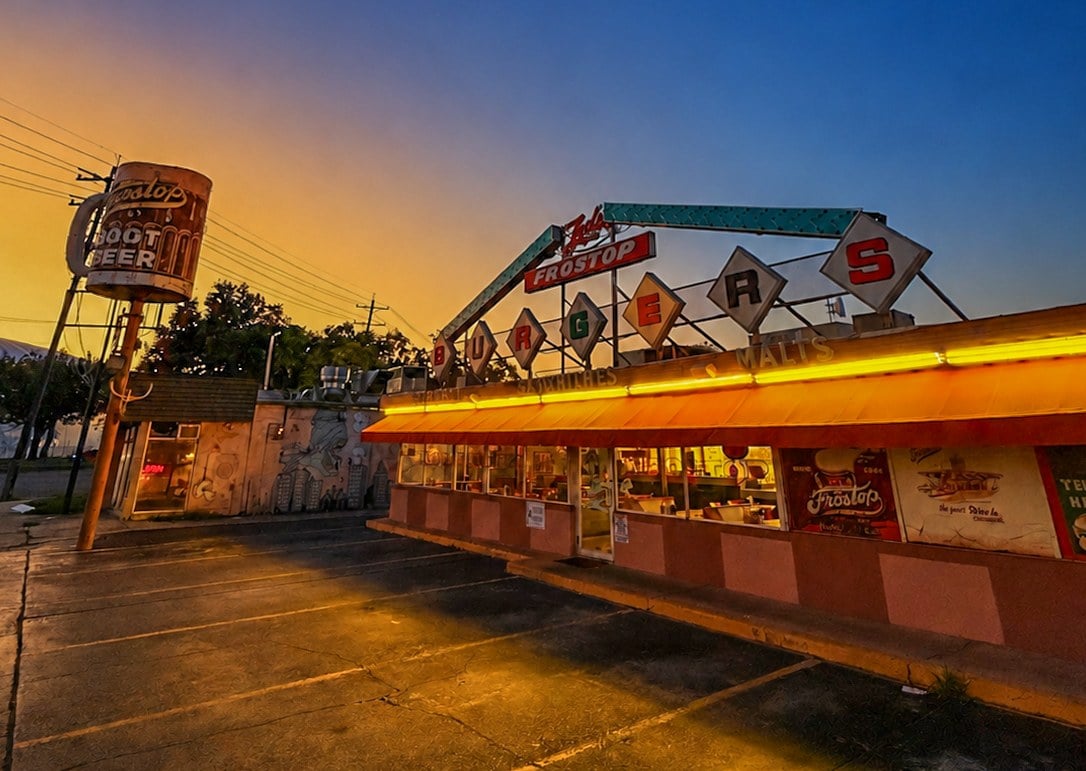
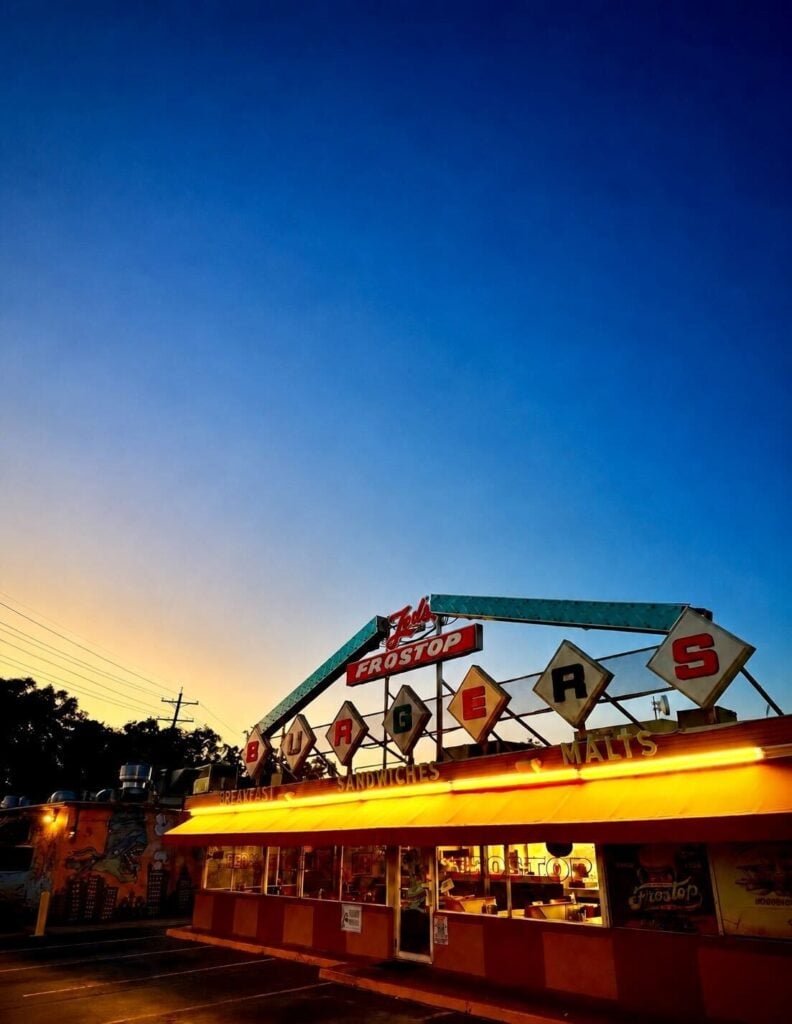
Ted’s Frostop, at Calhoun Street and South Claiborne Avenue, might be New Orleans’ best, if not only remaining, example of Googie-influenced architecture. Its future remains uncertain after RCR Claiborne Venture III LLC appealed the Historic District Landmarks Commission’s April 8 decision denying an application to demolish the beloved Uptown diner.
To understand why Frostop matters, it helps to understand the world that produced Googie.
After World War II, the United States saw major cultural shifts that substantially impacted people’s everyday life. For many Americans, the postwar era was defined by suburban expansion, economic prosperity, fascination with space exploration, and with that, a sense of optimism. Cars were a linchpin to this imagined future, with an expanding highway system that accelerated suburban growth and access to the American dream.
Roadside design changed in response to these increasingly auto-centric trends. Subtle signs and artfully curated window displays only worked for pedestrian customers. But the new driving-based lifestyle made it a luxury to stay in your car as much as possible. Businesses needed to spotlight their product in a single, loud, and visually prominent moment that would convince travelers to drive in rather than drive by.
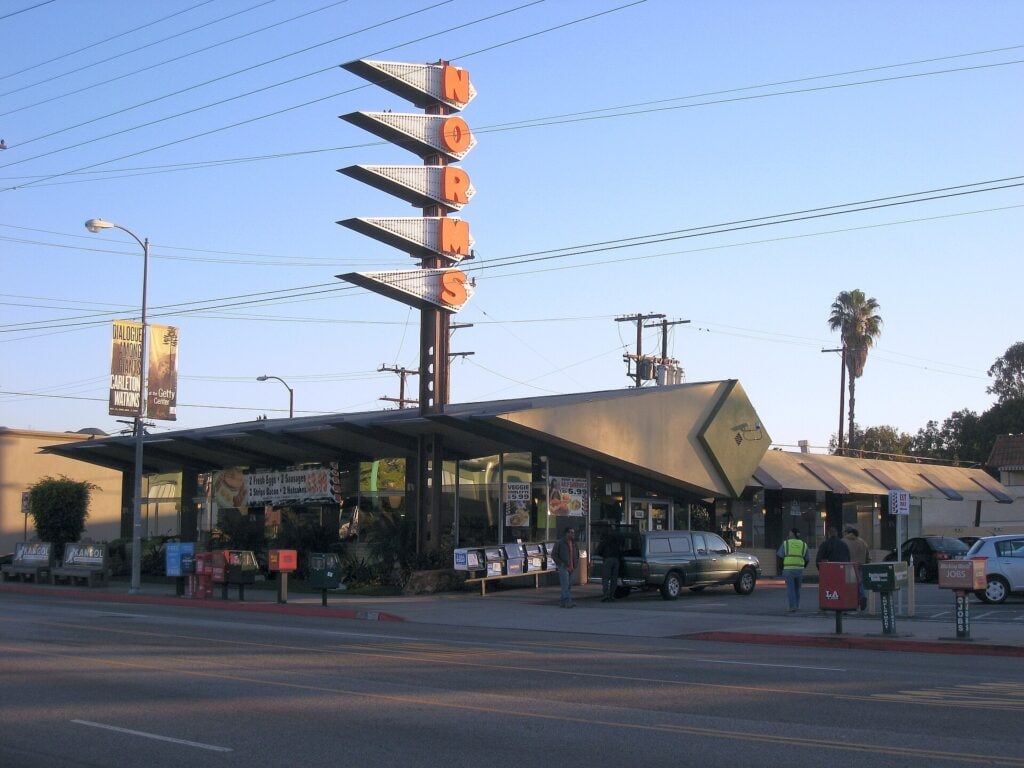
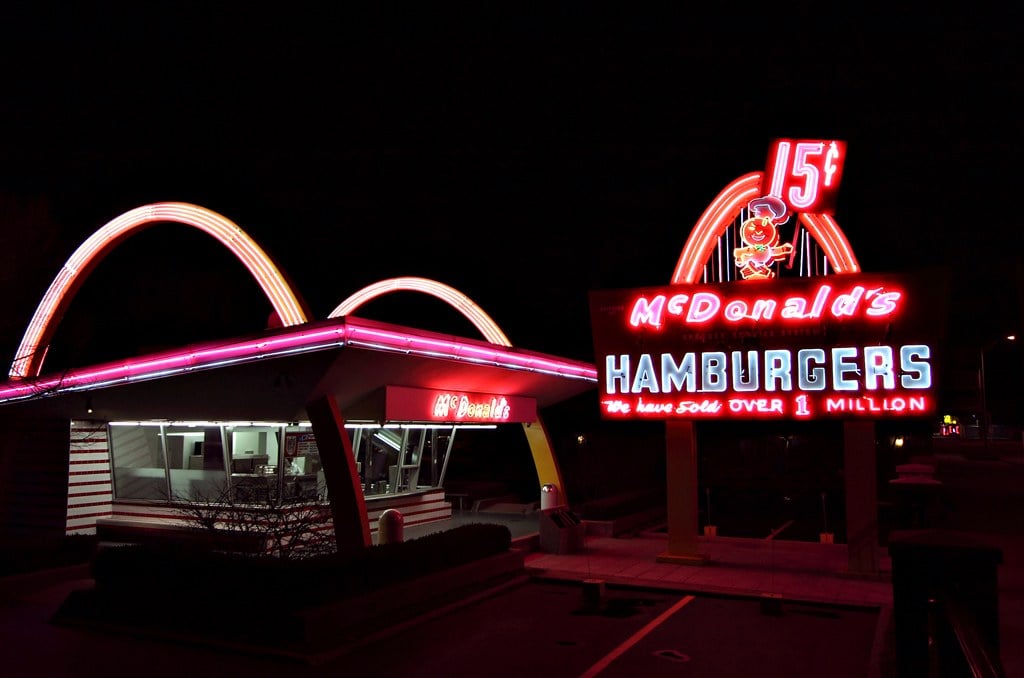
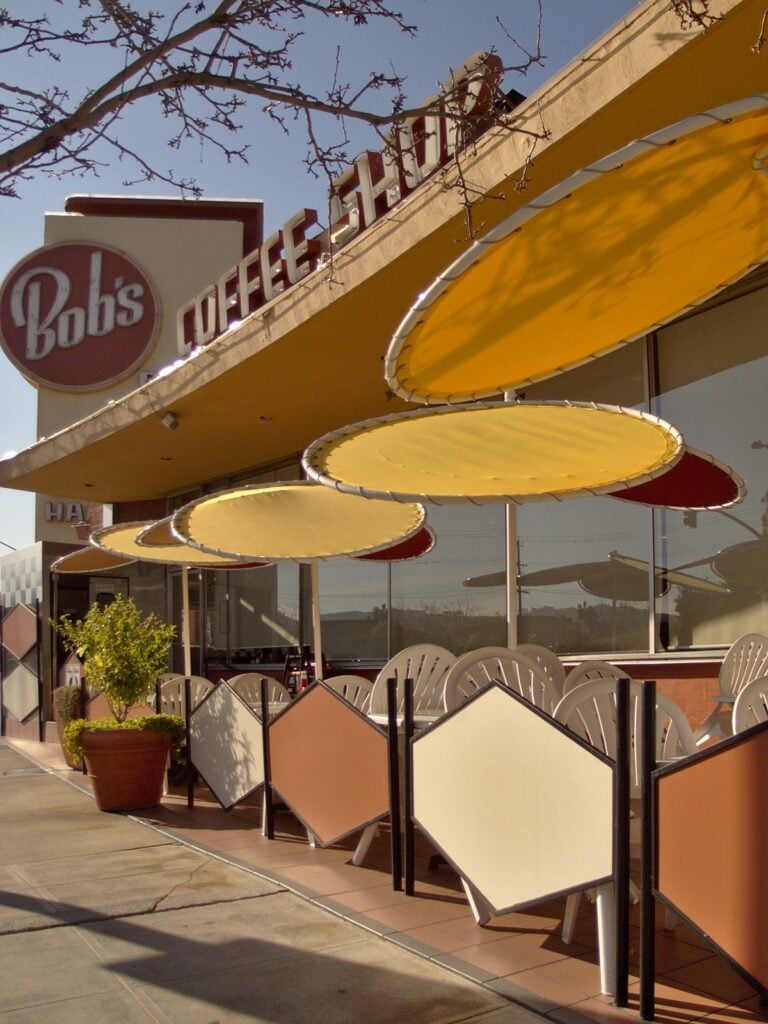
Googie-style buildings were easy to spot along the side of the road, with their playful Space Age facades, exaggerated roof shapes, expansive windows, neon lighting and large, colorful signs. The style first emerged in Southern California and turned ordinary commercial buildings – car washes, motels, drive-in movie theaters and fast-food restaurants – into spectacles rather than afterthoughts.
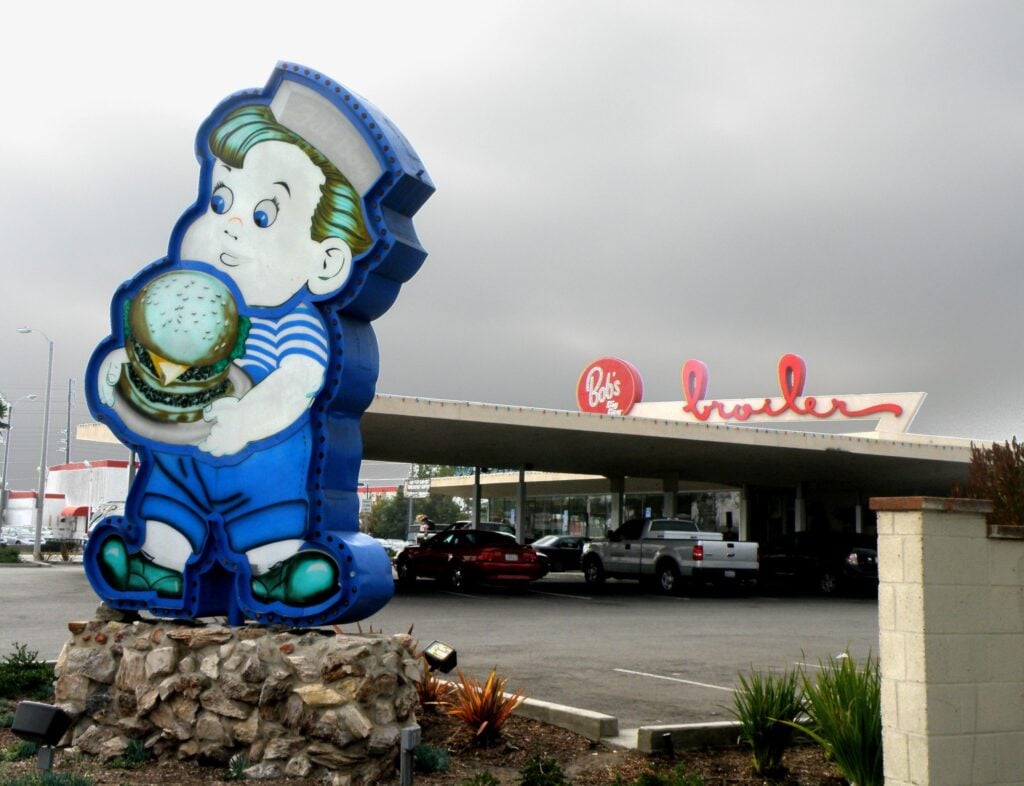
Bob’s Big Boy in Downey, California. Photo by Laurie Avocado.
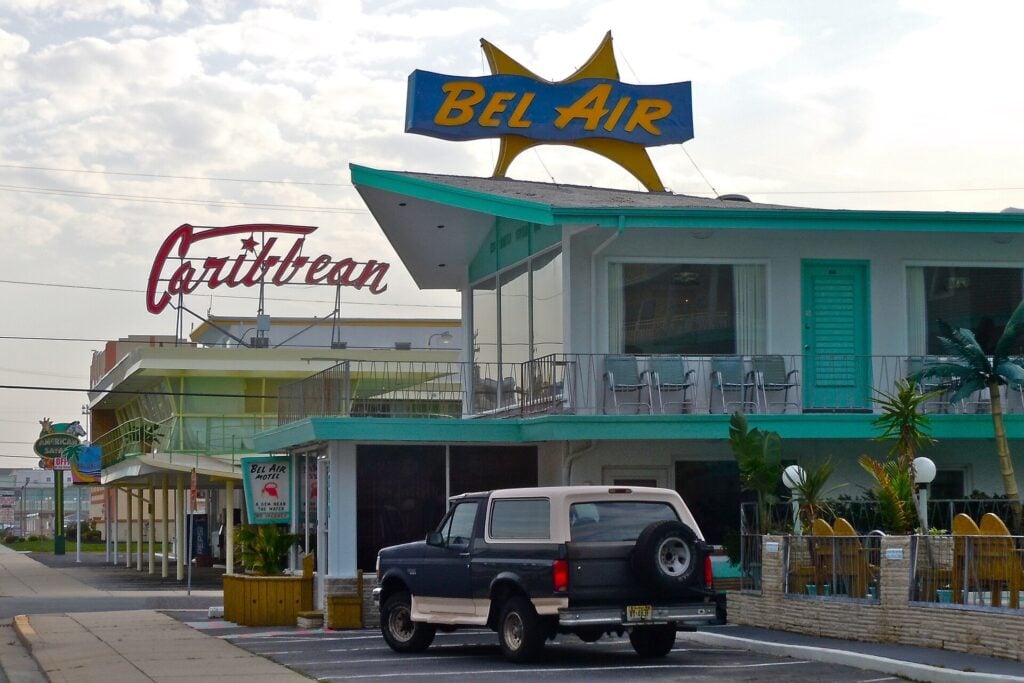
Bel Air and Caribbean Motel signs in Wildwood Crest, New Jersey. Photo by Smallbones.
Norm’s restaurant on La Cienega Boulevard in Los Angeles, California. Photo by Minnaert.
The Original McDonald’s: A Museum in San Bernardino, California opened by Richard and Maurice McDonald on May 15, 1940. Photo by Jerry Huddleston.
Patio tables at the Bob’s Big Boy restaurant in Burbank, California. Photo by Junkyardsparkle.
Ted’s Frostop is one of New Orleans’ last remaining examples of Googie-influenced architecture — a rare midcentury roadside landmark whose design, signage and sense of place cannot be replicated once lost. Photo by Clint Durrett.
Architecture critic and writer Douglas Haskell coined the term “Googie” in 1952, inspired by an eponymous restaurant in Los Angeles notable for its unusual facade angles and quirky signage. Unsurprisingly, the style was never taken particularly seriously in the design world. But in recent years, demolitions of these buildings have spurred a renewed appreciation for their value. Now, the lowbrow quality of Googie buildings seems integral to their historic significance: modern architecture that was accessible to everyone.
In 2024, New York Times writer Anna Kodé described Googie buildings as an “endangered species, facing redevelopment, demolition and restrictive design codes,” also noting that the “slow disappearance of the style has fueled the passion for it.”
Ted’s Frostop, built in 1955, illustrates strong Googie influences through its horizontal stretch of windows, neon lighting and eye-catching signage. Most famously, the site is marked by its iconic 14-foot-tall root beer mug that was manufactured locally and became a symbol of the franchise nationally.
New Orleans is renowned for its 19th and early 20th century architecture, but more recent buildings add important and interesting layers to the city’s story and streetscapes.
Midcentury commercial buildings are especially vulnerable because they often fall outside older historic district periods of significance, even when they have become deeply meaningful to the communities around them.
That is what makes the threat to Ted’s Frostop so important. The current proposal would replace the existing building with a new mixed-use structure that includes a rebuilt Frostop on the ground floor and student housing above. But Googie design is not just a sign that can be moved onto any building. It is the relationship between the building, sign, scale, color, materials, light, road and memory.
Details of the plan remain hazy, but one thing is clear: the drab grey box proposed by the developers will not spark any joy.
Get Preservation in Print Delivered to Your Door
Enjoyed this story? It originally appeared in Preservation in Print, PRC’s magazine exploring the people, places and stories behind New Orleans’ historic architecture, neighborhoods and culture.
Become a PRC member and get Preservation in Print delivered straight to your door! Stay in the know about our historic landscape, including the latest preservation news and stories from our historic cemeteries. Learn more about upcoming classes, tours, travel programs and special events throughout the year.
Not ready to become a member yet? Sign up for our newsletter and stay connected!