
The clock began to tick louder after Hurricane Ida’s violent winds subsided.
The Perseverance Benevolent and Mutual Aid Society Hall in the 7th Ward had hung on for several years as its condition worsened and concern about its future grew. Ida, a Category 4 storm that made landfall in August 2021, did the building no favors.
Everything came crashing down a year later.
Now, the historic hall in the 1600 block of North Villere Street is poised to make a comeback.
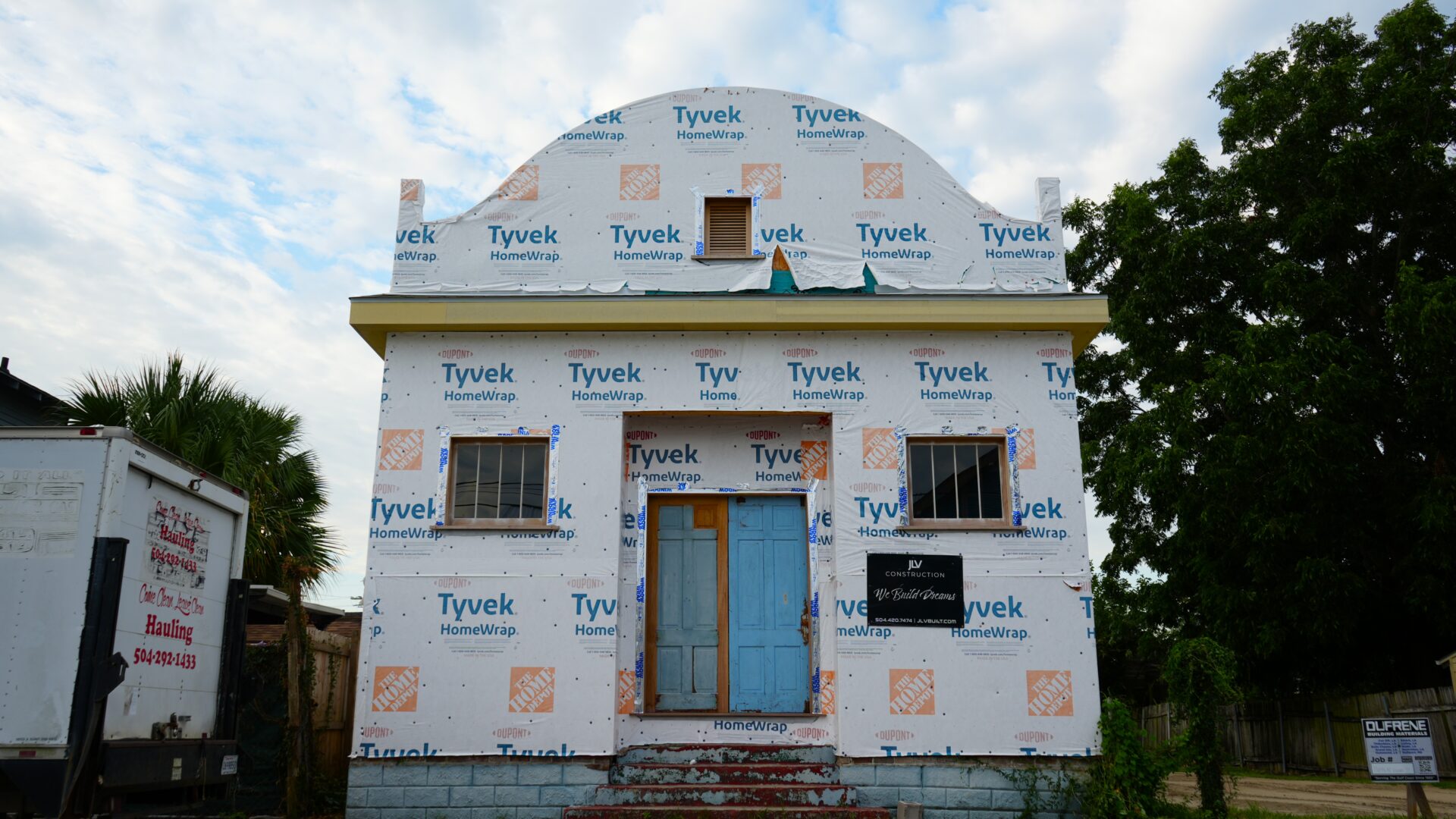
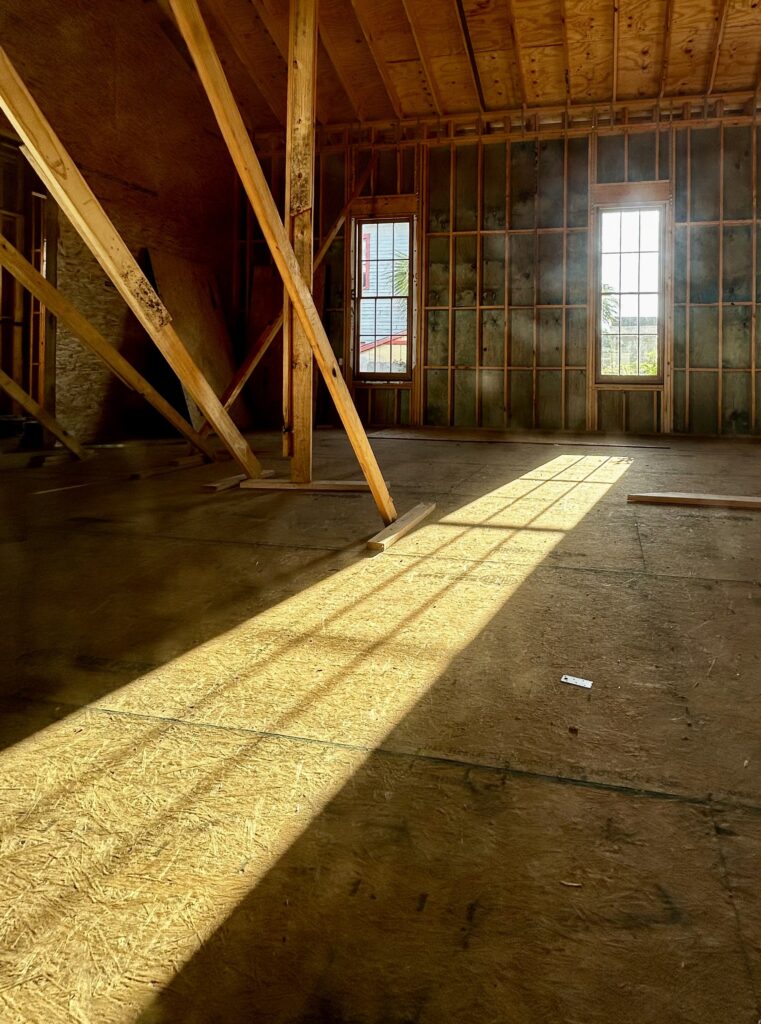
Gone are the braces that held up what remained of the front elevation and its Spanish Mission-style parapet after most of the building collapsed. These days, a new structure stands on the site, incorporating elements of the former hall that could be saved.
But a lot of work remains to be done.
A CRADLE OF JAZZ
Built around 1880, the structure housed the Perseverance Benevolent and Mutual Aid Society, one of the first benevolent societies in the city, which possibly began as far back as the 1780s. The location served as a cornerstone of New Orleans’ African American community.
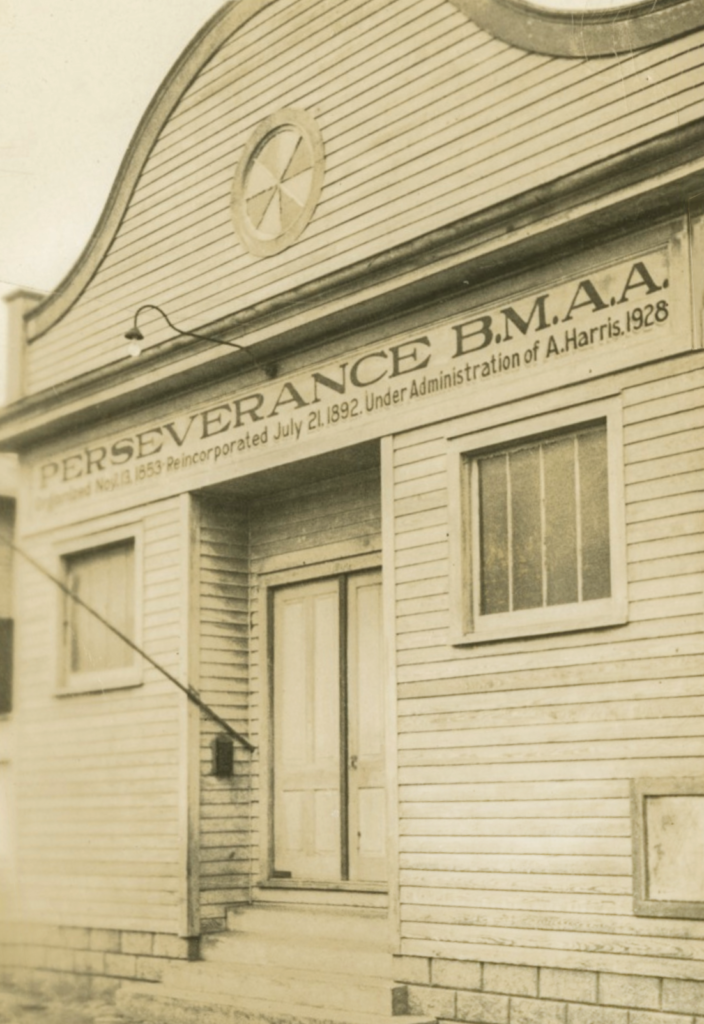
Sometimes known simply as Perseverance Hall — not to be confused with a structure of the same name in what is now Armstrong Park — it hosted performances by early jazz pioneers such as Sidney Bechet, Isadore Barbarin, Joe “King” Oliver and Buddy Bolden.
“In accordance to usual hall settings it contained a banquet, social meeting hall, with an elevated bandstand in the front to raise musicians above the crowd of dancers, along with a kitchen, lounge area, office, and lodging,” its National Register of Historic Places nomination reads in part.
A camelback addition, built in the 1920s, served as a place for traveling musicians to stay.
By the late 1940s, there was less of a need for community insurance, one of the key roles of mutual aid societies, and the property was put up for sale.
The founding minister of Holy Aid and Comfort Spiritual Church of Eternal Life bought it in 1949, and the building remains in the hands of the small congregation today.
PICKING UP THE PIECES
The Rev. Harold Lewis, a retired NOPD officer, became pastor in the early 2000s, not long before Hurricane Katrina made landfall. Katrina severely damaged the camelback, and it was removed.
The congregation continued to use the church while it raised the funds for repairs. Things looked promising in recent years thanks to grant-funded restoration efforts. In a cruel twist, that work was underway when Ida struck another blow.
The hurricane’s winds collapsed a partially repaired rear wall and a portion of the roof. The side walls also suffered structural damage. Unable to make those repairs, the church sat empty and eventually everything but the front façade collapsed.
The Preservation Resource Center assisted Lewis with an application for the Preserving Black Churches grant, a project of the National Trust for Historic Preservation’s African American Cultural Heritage Action Fund.
Holy Aid was awarded $100,000. Mia Kaplan, a local preservation architect, aided the PRC and Holy Aid by developing schematic drawings pro-bono to assist with the grant application and Request For Proposals (RFP) process. Albert Architecture was hired to complete a drawing set and JLV Construction was hired to complete the rebuilding and rehabilitation of the church.
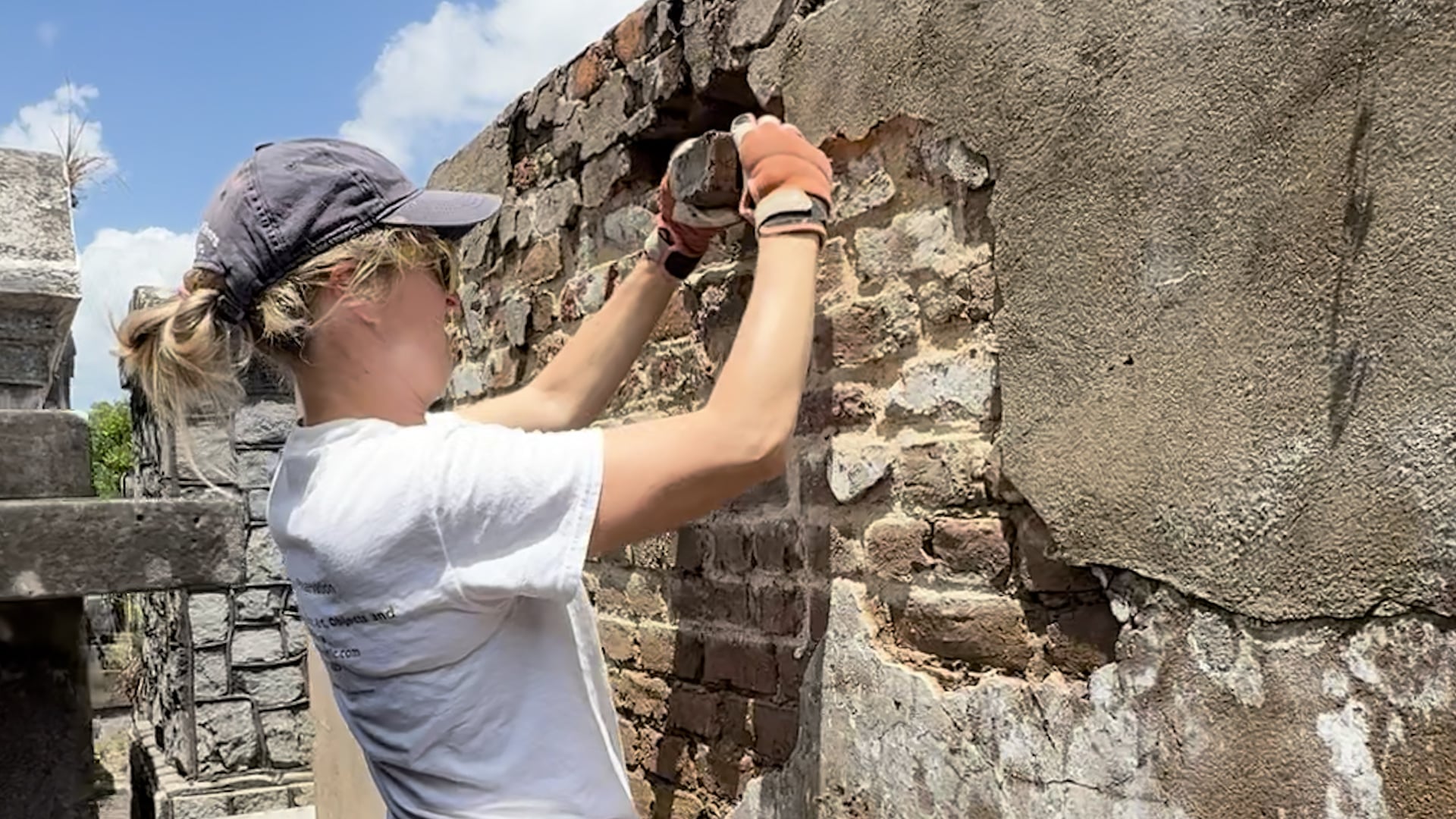
Along with the grant funding, Lewis put up a significant portion of the funds to complete the first phase of work, which included repairs to the existing foundation, reconstruction of the walls, the rehabilitation and salvage of the front façade, a new roof and new windows and doors.
The existing funding only accomplished so much, and much work remains to be done. The building still requires plumbing, mechanical, electrical, drywall, and finishes before it can be occupied once more.
When complete, Lewis hopes to reopen its doors for services, concerts and as a place for the community to gather, much like it was in the past. Helping the church to rebuild means preserving not just a building but a source of support and stability for vulnerable long-time residents of this changing community.
Michelle Shoriak is the PRC’s director of conservation and education and grant programs administrator.