

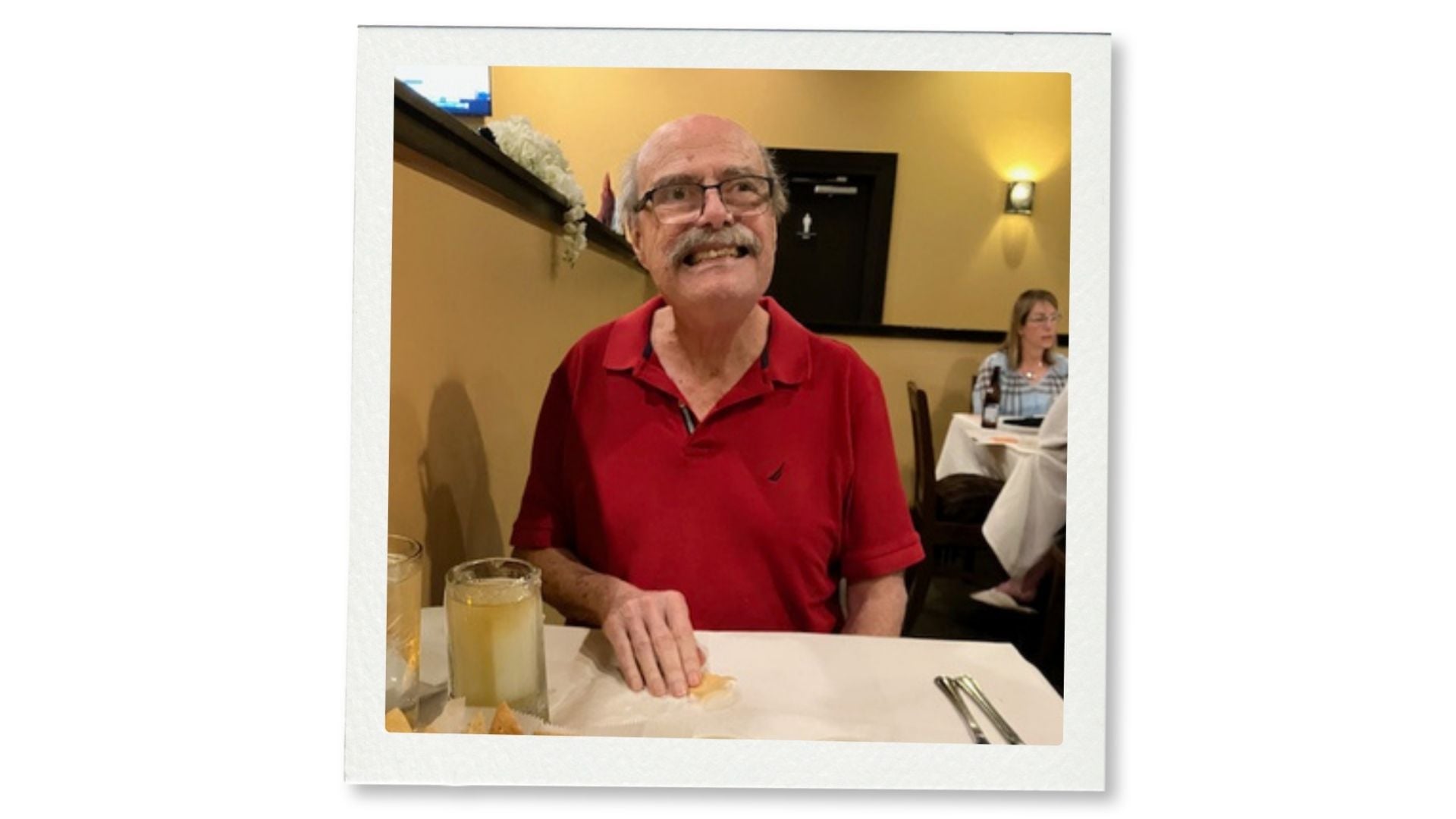
Jonathan Fricker played a transformative role for many decades in shaping how the State of Louisiana’s Historic Preservation Office identified and documented the historic built environment. His contributions to identifying the state’s historic resources cannot be overstated. Following enactment of the National Historic Preservation Act of 1966, as amended, our office opened in 1971. Jonathan joined the Division of Historic Preservation in 1977. As division director from 1986 to 2007, he helped lay a solid foundation on which our division still relies. In retirement, Jonathan and his wife, Donna — also a former division employee — occasionally helped the division when staff contacted them. But before we highlight the many ways Jonathan influenced the historic preservation community statewide, it is important to share how he positively affected his colleagues, both past and present.
John Maxwell said, “A great leader’s courage to fulfill his vision comes from passion, not position.” I knew from the moment I met Jonathan that he and Donna were passionate about preservation because they truly lived it. Jonathan was my first boss after I graduated with a Master’s of Preservation Studies from Tulane University, and they were our frontline experts. He was a masterful architectural historian who generously shared his knowledge and inspired our team members with his quiet leadership and unwavering commitment. He was also a gentle giant with a kind soul. He never sought recognition or accolades; instead, he found fulfillment in serving others — both as a dedicated public servant and as an engaged member of the community.
Other staff members had the following to share:
Tammy Bridges, grants manager, Division of Historic Preservation (retired):Jonathan was an outstanding team player and supervisor, consistently demonstrating commitment, compassion and patience. He trusted his staff and gave them leeway to own their work products while providing the guidance needed to ensure the office and division met their goals and objectives.
Pat Duncan, National Register coordinator, Division of Historic Preservation (retired): Jonathan’s knowledge of architecture and Louisiana’s historic architecture in particular was impressive. He shared it generously. Whenever I couldn’t find the word to describe a historic building feature, he immediately provided the correct term. He loved to show people how the state’s history could be traced through its historic buildings. Despite his inherent shyness, he became a popular writer and speaker whose informative, illustrated presentations delighted audiences.
Nancy Hawkins, archaeologist, Division of Archaeology (retired): When Jonathan became director of the Division of Historic Preservation, I had opportunities to see him as a pragmatist. I admired his ability to navigate the turbulent financial waters in state government. He worked to preserve the mission of the Division of Historic Preservation in lean times and worked to expand preservation programs during rare funding opportunities.
Shirley Lang, Office of Cultural Development, Business Services (retired): Jonathan had a wonderful sense of humor. Folks underestimated his sense of humor because he was so quiet, but he often tickled us with his brilliant observations and humor!
Duke Rivet, archaeologist, Division of Archaeology (retired): If I had to choose two words to describe Jonathan, they would be “sui generis.” He was truly “one of a kind” — in a class by himself — a unique combination of intelligence, wit and charm. I have many happy memories of my past association with him, both in the workplace and socially. Jonathan loved people and his profession, which he upheld to the highest standards. Take it from a Duke: He was a Prince!
Mike Varnado, senior architectural historian, Division of Historic Preservation (retired): We learned more from Jonathan than you could pick up in an architectural history college course. He lived for architectural history, as that was his passion.
From his curriculum vitae:
• He joined the division in 1977, worked directly with the staff historian, cleared a two-year National Register of Historic Places backlog and prepared an average of 40 nominations per year for individual resources and districts.
• In 1980, he was promoted to architectural historian manager and National Register coordinator.
• He also oversaw the Survey & Inventory Program and the Section 106 Review Program for the built environment.
• In a multiyear effort, he worked with National Park Service staff to develop a formula for listing the multitude of large urban districts in New Orleans, the largest of which contained more than 11,000 buildings.
• He oversaw and conducted paper-based, building-by-building surveys in New Orleans districts before completing the nominations.
• He meticulously researched and documented early historic buildings across the state, determined their construction dates from visible architectural clues and trained staff to do the same.
• He assisted staff in developing scopes of work for restoration projects and provided technical assistance.
• In 1986, he was promoted to acting director of the Division.
• In 1988, he was officially named director of the Division of Historic Preservation.
• During this time, he worked to enhance and expand the state’s Main Street program, which began in 1984.
• Under his leadership, the Division entered into a partnership with the Preservation Resource Center of New Orleans in 1990 to co-publish Preservation in Print, a collaboration that continues today.
• As director and Deputy State historic Preservation Officer, he provided administrative leadership for the Division in matters ranging from personnel issues to the annual state budget process.
• He authored SHPO policy white papers and aggressively pursued improved salaries for SHPO staff through Civil Service to attract qualified, stable and motivated professional staff.
• In 2002, he wrote successful legislation to enact the companion state commercial tax credit program, which proved to be a game changer for Louisiana’s historic resources.
• He expanded the Certified Local Government Program, hired a staff architect to provide design assistance and provided architects with fieldwork training in architectural history.
• In the wake of Hurricanes Katrina and Rita in 2005, he oversaw the rapid allocation of a $20 million emergency congressional appropriation to restore historic buildings, mostly in the New Orleans area.
• During this time, he worked alongside staff to assess damage and determine eligibility for the National Register. These decisions extended to the rigorous Section 106 environmental review process.
• He worked with FEMA and other federal agencies to ensure his staff was in the best position to expedite reviews, and he secured additional staff to support a grant program.
• Over the years, he continued to train staff in architectural history. As the National Register’s 50-year threshold began to encompass 1950s resources, he ensured staff were prepared to assess them through field studies and ongoing discussions.
• He received a Certificate of Appreciation from the National Park Service for his leadership in supporting the Historic American Buildings Survey (HABS) program through grants to many of Louisiana’s colleges and universities.
• In 2007, he received the Charles E. Dunbar Award, presented by the Louisiana Civil Service League — the highest form of recognition for a state employee’s service and career contributions.
• In 2007, Jonathan and his wife, Donna, retired from state government.
• In 2009, they formed Fricker Historic Preservation Services, LLC, specializing in tax credit projects in New Orleans.
• He completed a pioneering study of Louisiana architecture from 1945 to 1965 for the Louisiana Trust for Historic Preservation.
Publications:
• Preservation in Print: Numerous articles, largely associated with architectural history, published by the Preservation Resource Center of New Orleans and the Louisiana State Historic Preservation Office.
• Louisiana Buildings, 1720–1940 (LSU Press, 1997), contributing author.
• Louisiana Architecture: A Handbook on Styles (Center for Louisiana Studies, 1998), lead author.
Jonathan left an indelible mark on historic preservation across Louisiana. His many contributions have had a lasting impact, and he will be remembered for the legacy he leaves behind.
Get Preservation in Print Delivered to Your Door
Enjoyed this story? It originally appeared in Preservation in Print, PRC’s magazine exploring the people, places and stories behind New Orleans’ historic architecture, neighborhoods and culture.
Become a PRC member and get Preservation in Print delivered straight to your door! Stay in the know about our historic landscape, including the latest preservation news and stories from our historic cemeteries. Learn more about upcoming classes, tours, travel programs and special events throughout the year.
Not ready to become a member yet? Sign up for our newsletter and stay connected!